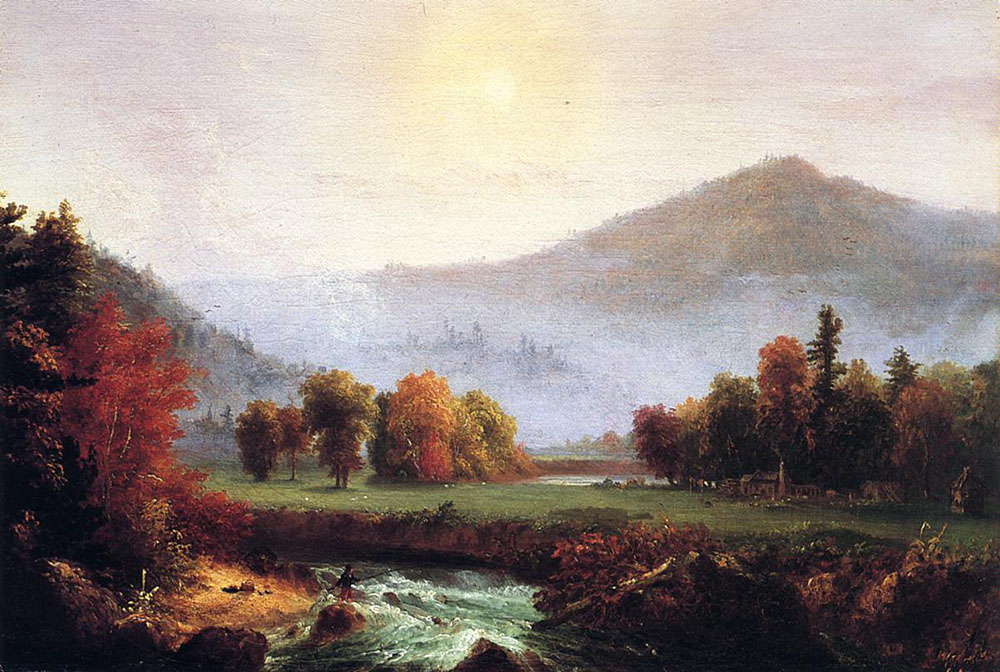
The band of deciduous forest which extends roughly from the Blue Ridge Mountains to northern Quebec is unusual in the world for its autumnal color. The only other extensive swathe of forest that rivals it stretches across parts of East Asia. Deciduous trees elsewhere do not exhibit the spectacular mixture of reds and yellows. In Europe and midwestern United States, trees typically turn only yellow. The reason for this geographic difference remains a mystery to scientists, though there are intriguing theories. The appearance of yellow leaves is understood. With the diminished light of fall, the green chlorophyll in leaves departs, allowing existing yellow pigment to appear. Red autum leaves are the consequence of a different process. With the drop in chlorophyll, anthocyanin, a red pigment, is produced in the leaf. This is a relatively new discovery and has led to several theories about why trees use energy to create red pigment when they are shedding their leaves. According to an hypothesis published recently in the journal New Phytologist and discussed in this ScienceDaily article, the different climatic conditions during ice ages 35 million years ago are responsible. The bands of forest in North America and Asia developed red pigments to ward off insects that were unable to survive the harsher conditions in Europe and other parts of the world where deciduous trees also evolved. A recent headline in a Vermont newspaper said, They Came, They Peeped, They Left. As the "leaf peepers" who crowd New England's backroads know, these trees are beautiful in panorama. But the greatest effect is from inside,…