FROM Our Borders, Our Selves: America in the Age of Multiculturalism, a forthcoming book from VDare Books by the late Lawrence Auster:
We do not resist, and in most cases do not even notice, the desacralizations that surround us because they constitute the very fabric of our culture. Every culture has an organizing idea that is expressed, consciously or unconsciously, in every facet of its physical and social environment. Just as the organizing idea of medieval Europe was Christianity, and the organizing idea of nineteenth century America was democracy, so the organizing idea of our present, multicultural society is nihilism.
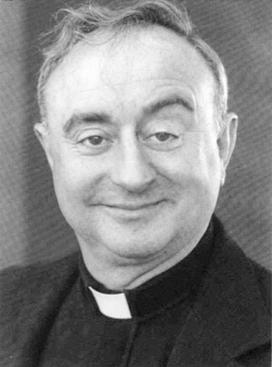
To characterize modern society as nihilistic may strike the reader as extreme. Nihilism is conventionally thought of as an attitude of total negation, as “a rage against creation and against civilization that will not be appeased until it has reduced them to absolute nothingness.” [Eugene Rose, Nihilism: The Root of the Revolution of the Modern Age, Fr. Seraphim Rose Foundation, Forestville, CA, 1994]. What does this frightful will to destruction have to do with our happy-go-lucky, prosperous, fun-loving country? The answer is that there are degrees and stages of nihilism short of the extreme kind described above. As Fr. Seraphim Rose writes, nihilism is entirely compatible with a “positive” attitude toward life, with enthusiasm, goals, self-esteem, creativity, and most of all with a sense of limitless freedom. What defines nihilism in all its variations is not an attitude of total negation toward everything (which, as we have said, is only the most extreme form of nihilism), but the belief that there is no absolute truth and no rational basis for determining right and wrong. In its early stages, nihilism simply denies the existence of moral truth. In its advanced stages, nihilism replaces moral truth by a new, non-moral criterion of human action–such as “power,” “vitality,” “self-fulfillment,” or “prosperity.” (more…)