[Skip the bad music in the first 15 seconds of this video.] AS the 15th anniversary of 9/11 approaches, we can honor those who died in the terrorist attacks, as well as those who bravely fought in wars and the many non-combatants tragically killed or wounded in those subsequent wars, by learning more about the events of that day or telling others about what we have learned. Christopher Bollyn mentions his books in this video. Masters of Deception by Zander Fuerza comes to similar conclusions. Worthwhile sites that provide mostly the physical case against the official story include: Architects and Engineers for Truth, Pilots for 9/11 Truth, Physics 9/11, Scholars for 9/11 Truth, and the Journal of 9/11 Studies.
LIONEL NATION describes his total loss of faith in the media after 9/11. (I don't accept his strange refusal to speculate overall on what actually occurred.) More recently, Mr. Nation argued compellingly that Trump is throwing the election.
A sketch of the planned museum and memorial in Alabama
ON March 15, 1900, in Hazelhurst, Ga., Bryan and Numun Goolsby agreed to cut cotton for farmer Dan Mims. But shortly after they were hired, they hit Mr. Mims over the head with their axe handles, stabbed him in the eye and cut his throat. When his wife heard a commotion and came out of the farmhouse with their baby in her arms, the Goolsby brothers knocked her to the ground. The baby was killed in the fall and she was seriously injured. (Source.)
The teenaged brothers, who were black and were apparently intending to rob the couple even though they were hired for pay, fled. One of them was later lynched by an angry mob. Mr. Goolsby will presumably be among those honored, his name etched in stone, by a new $20 million memorial in Alabama to victims of vigilante mobs. See Mike King’s report on this temple to murderers and rapists, where, in a desperate and almost comical attempt at creating suitable altars, soil samples from sacred spots where lynchings occurred will be on display. You won’t find a lick of sympathy for the likes of Mr. and Mrs. Mims and their poor baby in The New York Times’s piece on the project. (more…)
Pennsylvania Attorney General Kathleen Kane in court yesterday
DOES anyone actually believe the feminist contention that women make politics better? The case of Pennsylvania Attorney General Kathleen G. Kane, who was elected the first woman in the post four years ago in a wave of feminist euphoria, is more evidence to the contrary.
Kane, a Democrat, was convicted yesterday of perjury and abuse of office charges in connection with her efforts to shut down a corruption investigation in Philadelphia and exact revenge against a political enemy. She was so unpopular that five of her former or current aides testified against her in court, according to The Philadelphia Inquirer.
Montgomery County District Attorney Kevin R. Steele persuaded jurors that Kane orchestrated the illegal leak of secret grand jury documents to plant a June 2014 story critical of her nemesis, former state prosecutor Frank Fina. Kane then lied about her actions under oath, the jury found.
She will be sentenced within 90 days and must resign if the convictions are not overturned.
Kane showed a penchant early on for violating protocol and the limits of her office when in her first year she refused to defend the state’s marriage law in court. Thus began a statewide career of reckless abandon. (more…)
AMERICAN art museums possess thousands of paintings and statues of the Virgin Mary. Isn't it odd? Museums aren't churches. Why are these religious images there? They are there because of their undeniable beauty. Sadly, they are also there because the churches they once adorned were plundered, closed or destroyed. Most were taken from altars and churches. Even in our de-supernaturalized world, where the idea that a real woman could become the "Mother of God" is inconceivable and even laughable, even in this world, no one seriously challenges the inclusion of these works in the canon of masterpieces. Such nobility and virtue, tenderness and maternal devotion, such supreme feminine beauty, shine forth from them. Mary was the most beautiful woman. She is the most beautiful woman. She is full of grace, in the way a beautiful garden is full of blossom, seed and leaf. Artists cannot exhaust the subject of Mary's beauty. It is impossible. If every artist in the entire world were to devote his life to depicting Mary (admittedly an absurd thought in a world where artists devote themselves to depicting ugliness), they together could not sufficiently capture her, such is the nature of her perfection and the profundity of her beauty. Never do we see Mary smiling in an extroverted way. Her gaze is usually averted. She is always in a state of contemplation. It is true: Her soul magnified the Lord. If these paintings were all suddenly taken away,…
ALAN writes: In 1962, William H. Parker, then police chief of Los Angeles, nailed the evils around him: resentment against authority, mass communications, automobile culture, women working outside the home, and the weakening of American families. These are a few of the reasons why he was often vilified. But I suggest he could see, think, and speak with pinpoint accuracy. It would be a phenomenal achievement if American men today could do half that well. “….since the end of world War II, I think there has been a world-wide revolution against constituted authority. A police officer is the living, physical symbol of authority and so it is against him that this resentment is frequently directed. “….I do think technological changes in American life have largely disrupted, if not destroyed, the home influence. At the time when communications and freedom of movement were rather limited, the family was in control. One gravitated to the home for all one’s social life, or most of it. Now, of course, the home has become the place where many people just keep their clothes and eat and sleep. “It was a tragedy when the mothers of America went out of the home and became wage-earners. Many of them had to do it. But I believe that raising a family is a full-time job. We haven’t made any formal, scientific study of case histories of juvenile crime here to relate the crime to the family and…
THE 21-part documentary New World Order: Communism by the Backdoor, produced by Dennis Wise, isa powerful and riveting exploration of the totalitarian forces of globalism. Many pressing issues are discussed: World War II, conflict in the Middle East, the “cancer” of usury, the migrant invasion of Europe, mass immigration in America, multiculturalism, false flags, the Talmudic quest for world domination, Islam in Europe, Britain’s downfall, the occult, the satanic decadence of popular culture — and much more, all of it interconnected because all of it derives from a heavily concealed and organized effort to create a one world government, or New World Order.
One of the important points made by Wise and those interviewed is that we cannot address the problems of today unless we understand the wars of the 20th century. The series busts some of the myths, especially those involving the demonization of the German people. In addition, the episodes on Freemasonry, the United Nations and Hollywood are terrific. Some outstanding commentators, such as E. Michael Jones and John MacManus, are featured. Even the segment on the infiltration of the Catholic Church is dynamite, giving a lucid and ringing endorsement of sedevacantism. I have reservations or objections about a few of the points made (I do not, for instance, support a war of eradication against Israel, as is mentioned by one of the people interviewed; also the episode on the Torah should have been about the Talmud) and there is strong language condemning Judaic subversion that will make some readers truly apoplectic, but my impression after watching 16 episodes is overwhelmingly positive. (Of course, some will find the points made here so contrary to what they have been taught that they will reject all of it — and be mad as hell as well.) I am sure this is well worth your time, especially in these dog days of summer. If you find anything that is unsupported by the evidence, I’d be interested to know.
(Foul language alert for the opening few minutes. At least one episode, which carries a warning, includes violent imagery.) (more…)
THE belief that if Catholics are fun, fun, fun, they will draw people to their faith, is a cardinal tenet of the false religion of Vatican II. In fact, many people are simply repelled by something so lacking in reverence, majesty and seriousness. If you want song and dance you can go to your local Evangelical church, which is usually far less stringent in its moral demands. Besides, even cool nuns make lousy dancers.
A blogger calls the annual pagan festival known as World Youth Day, which just wrapped up in Krakow, Poland, “World Moron Day.” At The Eyewitness, hewrites:
I’m tempted to once again mention the famous Belloc quote about standing by and watching the Barbarians but will instead point out that this sort of thing is not Catholic. Clueless young people travel long distances for an emotional “high” offered by a media-celebrated Pope. What good will this do for them? What solid, demonstrable good? Emotions do not produce Saints, and these jamborees are nothing if not emotionalism gone to extremes. (more…)
Thank you for posting the interview with Assad. I watched it in its entirety. It supports my suspicion that he is not the boogeyman he is made out to be in the media. The interviewer had an obvious intention to make him out as such but failed spectacularly.
I asked my husband if the propaganda has became more painfully obvious lately or if we’re more tuned in to detecting the lies. It’s his impression that it has gotten more obvious. I follow the news much more than he does. Many of those that can critically think have figured it out and the media are focusing on the remaining people who believe what they see on TV without question.
I, like Mike Rivero, on What Really Happened, worry about how they will handle losing this propaganda war… Major false flag is my big fear. Of course I pray for that not to happen.
Thank you for your posts. I appreciate your blog. (more…)
TONIGHT and tomorrow night, the spectacular summer display of shooting stars known as the Perseids will be at its peak. If you are fortunate enough to live away from dense urban lights and are in the Northern Hemisphere, you should be able to see as many as 150 of the flaming bits of comet debris every hour in the sky. The moon will set at about 1 a.m. (your local time) tonight and the lights should be especially visible thereafter. You can also watch the meteor shower live online. The meteors appear in all areas of the sky but always streak away from the constellation Perseus; hence their name. The flaming particles are the debris left in the path of the Comet Swift-Tuttle, which takes 130 years to circle the sun; the earth passes through the densest area tomorrow night. Sarah Lewin writes at Space.com: Comet Swift-Tuttle is the largest object known to repeatedly pass by Earth; its nucleus is about 16 miles (26 kilometers) wide. It last passed nearby Earth during its orbit around the sun in 1992, and the next time will be in 2126. But it won't be forgotten in the meantime, because Earth passes through the dust and debris it leaves behind every year, creating the annual Perseid meteor shower. When you sit back to watch a meteor shower, you're actually seeing the pieces of comet debris heat up as they enter the atmosphere and burn…
SAGE M. writes: The day we’ve long dreaded has arrived, finally. May the memory of the West live long, and may it bear fruit yet greater than that which we have known.
SHEIK Ahmed el-Tayeb, the Grand Imam of Al-Azhar University in Cairo and chief scholar of Sunni Islam, has been the object of friendly overtures by "Pope" Francis, including a warm meeting (above) two months ago. The sheik recently reiterated his belief, based on the Koran, that all apostates -- including converts to Christianity -- should be killed. See more here, at Mahound's Paradise.
I HIGHLY recommend this recent interview with Syrian President Bashar Al-Assad. He contends the United States government and its allies never intended to defeat the country's terrorists, including ISIS, but has sought to manage them in the hope of toppling him.
IN THIS lull between reports of massacres and terrorist events, I would like to suggest strategies for dealing with these extremely alarming and disturbing incidents, events which are having such a profound effect on our world. Surely, there will be more. “Conspiracy” researchers will continue to investigate each and every report, but it takes time for them to sift through it all. They commit inevitable mistakes and blunders, and sometimes seem to suggest that everything in the news is disinformation. Everything in the news is not disinformation. Deception is embedded in truth. Perhaps you reject all of their skepticism and have a rock-solid confidence in the non-existence of mass manipulation. In any event, most people do not have time or energy to apply a searing skepticism to the news and find out what is true and what is false. In light of this, consider responding in the following way whenever a mass shooting or terrorist event occurs: * Follow written reports (or none at all) and avoid imagery, which is more emotionally powerful and prone to manipulation. Obviously those researching the media presentation of these events must look at the imagery, but you don't need to if you don't want to get caught up in the details or fear falling into a universal skepticism that is confusing. * Reject "gun control." The solution is armed citizens, not “gun control.” School massacres can be prevented by a minority of armed teachers or administrators trained…
Comments Off on Mass Shootings and Terror: How to Respond
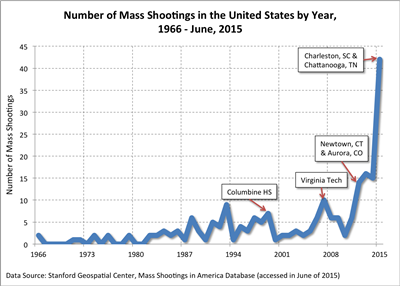
THERE IS no precedent in American history for the number of civilian mass shootings that have occurred — 16 so far this year — under Obama. Dave Gahary reports on the issue at American Free Press. There is also no precedent for Obama’s politicization of shootings. Ironically, gun sales have soared. (more…)
ESCAPE from this hectic world and all its distractions. Here is one of nature's most beautiful sounds: the song of the wood thrush, recorded in the Smoky Mountains. (See "Thrush Hollow")