This must be a first. Indra K. Noyi, the CEO of PepsiCo, an Indian trailblazer to boot, confesses she did not have it all. Neither can any woman who aspires to her kind of success.
Happy Fourth of July weekend to you and your family!
FOR Algerians in Paris, the World Cup means riots. Riot if your team wins. Riot if your team loses. And riot if it's a tie. There is an endless supply of cars to be torched. Read about the latest at Gallawatch.
“FREE” contraceptives and abortion-causing drugs, distributed via government fiat, are the ultimate expression of what the writer E. Michael Jones, borrowing a phrase from St. Augustine, called libido dominandi. In Jones’s definition, libido dominandi is the drive for political control through sexual freedom. In his book of the same name, Jones wrote that a regime of sexual liberation is one of bondage, rendering citizens distracted and controlled by their passions and the havoc that results. In his preface to Brave New World, a fictitious rendition of this rule, Aldous Huxley wrote, “As political and economic freedom diminishes, sexual freedom tends compensatingly to increase.”
In the libido dominandi society, we are told that the natural functions of a woman’s body are a threat to her health. Bureaucrats routinely utter this ridiculous falsehood and no one bats an eye, which is why this nation of libidinous serfs and contraceptive poppers, who do not even notice how thoroughly unprecedented this all is in the history of humankind, will be despised by the unhappy few in forthcoming generations.
Yesterday, the United States Supreme Court, in Burwell v. Hobby Lobby, ruled that family-owned corporations are exempt from the “Affordable Care Act’s” requirement that they must provide insurance coverage for drugs that terminate the lives of human beings in the womb. This is news that should be put under the file: “It Could Be Much, Much Worse, But Things Are Still Very, Very Bad.” Corporations have had to request permission from the federal government to exempt themselves from encouraging and facilitating population control and the pharmaceutical murder of unborn children. We are far advanced down the road to serfdom despite this ruling. (more…)
Philoscribe’s description of the trio waiting in queue at the hair salon is full of interest: “One was a hideously overweight woman, her arms encased in a sleeve of tattoos that extended across her exposed upper chest. The second was a man in his early 20s with a ring under his nostril and washer-size rings in the lobes of his ears. The third [was] a man in his 40s… wearing the male equivalent of a tank top T-shirt, baggy cargo shorts and sandals that amply exposed his corpulent physique and body hair.”
While (yes, yes, and yes) corpulence is sometimes an organic condition, difficult to control, usually it is a consequence of indiscipline and bad diet. In my earlier comments on tattooing, I argued that the tattoo is a desperate attempt to be someone undertaken by a subject who believes that he lacks a noticeable identity. Tattoos serve this function in archaic societies, where they signify social status, but so does corpulence.(more…)
Only today, I read about Philip Chism’s recent attack at a Department of Youth Services detention center. In the Daily Mail article linked above, my jaw dropped when I read that he “slipped away from caregivers” and that a hospital attorney after the attack stated that “while the patients’ rooms are not locked, Chism remains under guard at night and is rarely alone.” [Emphases mine.] There are quotations from others almost equally shocking. Please read for yourself.
This is insanity. I instantly remembered a quote of yours in context of the murder itself, calling for a swift trial and implementation of the death penalty if convicted, in any case such as this.
Again, madness.
Thank you for your time, and your continued great work.
LAURA E. writes: Two of your blog's recurring themes from the past few weeks merged in this article published in the Wall Street Journal a few days ago. Apparently the Defense Department estimates that 71 percent of American young people, aged 17-24, would not qualify for military service if they tried to enlist. The most important reasons, as described in the article, are excessive body weight and tattoos. I read so many journalistic pieces that echo the themes on your blog that I could make it my part-time job just sending you interesting tangential links :-) Nevertheless the mainstream press goes out of its way to avoid linking these phenomena, drawing the obvious conclusions, and then blazing a path to a better world. I have to turn to your blog for that synthesis. Keep fighting the good fight.
Comments Off on The Military Struggles to Find the Un-Tattooed
I thank Dr. Thomas F. Bertonneau and Laura Wood and the other commentators for the recent posts on the rising prevalence of tattoos and scarification among people in our society. It so happens that I had been thinking a lot about this lately.
I live in the rural northeast, in a part of the country that decades ago was hallowed out by the disappearance of manufacturing, leaving communities abandoned and mired in borderline poverty and families barely hanging on to a decent existence. Many of my neighbors and their families live in trailers. There is a segment of the population that is affluent, but the “middle” is nearly gone, leaving the communities polarized by extremes.
THIS essay by the Rev. James Jackson, FSSP, of Our Lady of Mount Carmel in Littleton, Colorado, posted here in 2011, is worth revisiting in light of recent posts on the subject:
I was asked some time ago to give some guidance on tattoos, and though it took far too long to get to this, here is my advice on the subject.
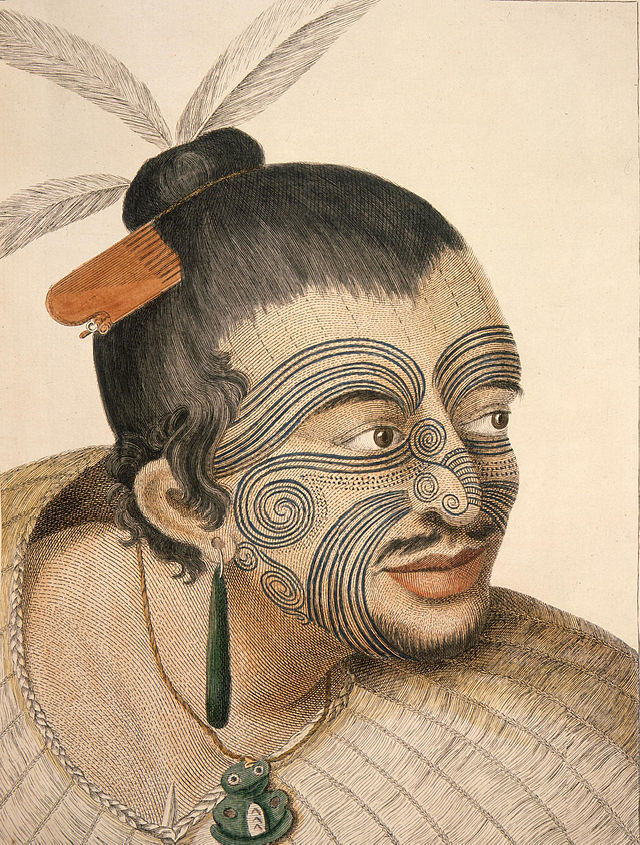
In the Old Testament we read the following: “You shall not make any cuttings in your flesh, for the dead: neither shall you make in yourselves any figures or marks. I am the Lord.” (Lev. 19.28)
With that being said, we Catholics are not fundamentalists (may it please God) and it would be wrong to condemn everyone everywhere who has a tattoo, or even many tattoos. It so happens that in some cultures, marks on the flesh are quite acceptable. Ethiopian Christians tattoo the cross on their foreheads and I understand this to be an ancient custom. I’m not advocating cultural relativism here, but there is a social element to this morality.In Western societies however, a tattoo would serve a very different function e.g., mere decoration. So when would the decoration be unacceptable? Here are a few guidelines:
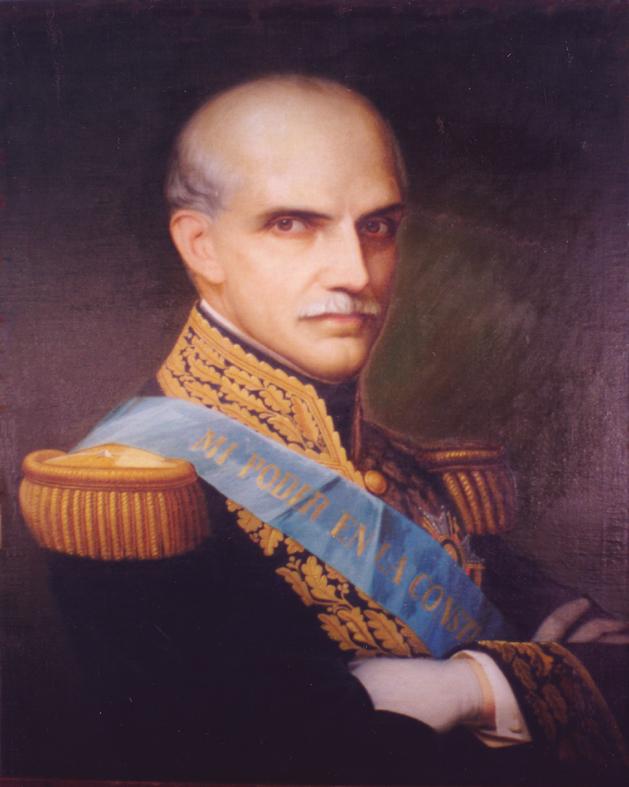
Moreno was elected three times to the presidency of Ecuador, the last time in 1875. When Moreno consecrated that small nation to the Sacred Heart, he acted in keeping with the famous revelations of St. Margaret Mary Alacoque, a French nun of the 17th century who said that Christ appeared to her and instructed kings and nations, as well as individuals, to adore his heart and receive an outpouring of graces. Moreno sealed his fate as well. For with that event, it is believed, Freemasons resolved once and for all to assassinate him.
Devotees of the Sacred Heart traditionally go to Mass and receive Communion on the First Friday of the month. On the first Friday of August, 1875, after Mass, work on his inauguration address, and a final visit to the Blessed Sacrament, Moreno walked to the Presidential Palace. According to Marian Horvat’s account:
At the steps of the Presidential Palace he greeted several persons, including Faustino Rayo, who would shortly strike the first brutal machete blow. Rayo, who held a grudge against Moreno for dismissing him from a lucrative office because of his dishonest practices, had taken up leatherwork. He pretended, however, to be on friendly terms with the President, who had recently contracted him to make a saddle for his young son (his only living child), Gabriel García del Alcázar.
He climbed the side stairs to the porch with its thick colonial pillars. At that time there were no railings between the columns, as we see today. In fact, the scrolled black grills came from the famous Tuilleries Palace in Paris, torn down by the revolutionaries and ordered by Garcia Moreno himself for Ecuador’s Palace. They would only arrive and be installed, however, after his death.
He was approaching the Treasury Department’s entrance into the Palace. There, Rayo rushed forward and attacked him with a machete. The first blow struck his hat, which flew off his head and landed in the plaza below. Rayo delivered more blows, and his fellow conspirators took position and fired their guns. Their bullets only grazed him.
Afterward, the infamous cry of Rayo, “Die, tyrant!”
And the beautiful response of Garcia Moreno, staggering from the wounds, “Dios no muere!” “God does not die.” These were the last words of a line he had often repeated, “I am only a man who can be killed and replaced, but God does not die.”
There is a staggering absence of men in certain parts of the American workforce. This is something I have noticed and it is blowing my mind. Where men were once dominant, they are now all but missing. I went to my dentist the other day for an annual checkup. My dentist is a woman. Her entire staff of around twenty people from the receptionist on down to dental assistants and dental hygienists are all female.
My local bank is dominated by females. I have also been looking for a new place to live and virtually all of the real estate agents are women, as is building management.
My cousin runs a law firm. Once again, with the exception of people who have to do grunt work, her entire staff of over one hundred people is 98 percent female.
IT is not surprising that the ideal of the dual-income household has corresponded with a decline in overall wealth for the middle class and lower income families. The dual-income model is much easier to maintain at the higher levels, where nannies and paid services can be hired and income from investments cushion the loss of domestic order.
Aristotle remarked in The Poetics that man is the most imitative of all animals. Two-and-a-half millennia later, picking up where Aristotle left off, René Girard developed an entire “Fundamental Anthropology,” drawing on Greek tragedy and the four Gospels, which argues (among other essential propositions) that the thing that people are most prone to imitate is the delusory impression that other people enjoy a degree of pure being greater than their own, which, as with all “mediated objects,” they strive to appropriate. Old sayings express the same observation. Thus “the grass is always greener on the other side of the fence.” That is, my neighbor is better off than I am, and I can’t bear it. Biblical morality, as Girard notes, enjoins imitation, as in the Tenth Commandment and for the good reason that imitation unchecked runs to covetousness and so gives rise to conflicts in the community. Biblical religion, especially Christianity, offers consolation for the ascetic gesture of opting out of the wicked deliciousness of coveting things. It encourages people to develop their internal, or spiritual, resources. All of traditional Western high culture has the same aim – through ritual, philosophy, literature, and the arts to cultivate the soul by cultivating the virtues.
What has all of this to do with tattooing and the current craze for it?
I live in a small rural town in Michigan where it seems as though every second or third woman from the age of 18 to 70 has adorned herself with a tattoo. I sometimes wonder whether nowadays there are even more women wearing tattoos than men. Today, however, took the cake. A high-functioning mentally-retarded man of about 40, who works in a local supermarket, has a new tattoo covering much of one forearm.
Responding to a major case of research misconduct, federal prosecutors have taken the rare step of filing charges against a scientist after he admitted falsifying data that led to millions in grants and hopes of a breakthrough in AIDS vaccine research.
Investigators say former Iowa State University laboratory manager Dong-Pyou Han has confessed to spiking samples of rabbit blood with human antibodies to make an experimental HIV vaccine appear to have great promise. After years of work and millions in National Institutes of Health grants, another laboratory uncovered irregularities that suggested the results — once hailed as groundbreaking — were bogus.
I recently received a short video clip – just more than one minute – that has haunted me ever since I saw it more than a week ago. About a dozen men who were guarding a hospital in Aleppo in western Syria were captured by Sunni rebels, hogtied and executed in a barbaric way, all of which is visible in the clip. The men are young, but what struck me is their total composure in facing death by their Islamic captors, something that I cannot get out of my mind. What was the heinous crime for which they were killed? They were professed Christians, and they were living – or should I say dying? – proof of what awaits Syria if the Bashad al-Assad government falls.
IN two posts at Reclaiming Beauty (here and here), Kidist Paulos Asrat reflects upon changes at St. Michael’s Hospital in Toronto. The hospital recently removed the image of St. Michael the Archangel from its logo. The image was inspired in part by an Italian statue of the saint which was found encrusted with dirt in a second hand shop on Queen street in the 19th century and has long stood restored in the hospital’s lobby.
Below is a modernist addition to the hospital funded by Hong Kong billionaire Li Ka-Shing, who has close ties with the Chinese government. The hospital’s insipid slogan is now “St. Michael’s, Inspired Care, Inspiring Science,” sure to offend no one in multicultural Canada.