Before and After “Urban Renewal” in St. Louis
ALAN writes:
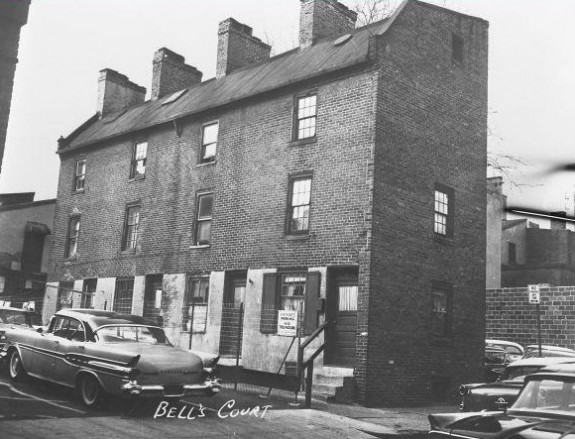
In 1954, more than thirty tall, modern apartment buildings intended for “public housing” were opened near downtown St. Louis. They are “a shining addition to the city’s skyline” and people of different races and faiths will live there in peace and harmony. So said the St. Louis Post-Dispatch (June 19, 1954). Sixteen years later, those buildings had been made into the site of out-of-control crime and vandalism. Six years after that, they were dynamited into dust. “Twenty-story tombstones” is how Lillian Boehme described such apartment buildings in her perceptive review of the premises, costs, and consequences of “urban renewal” schemes (American Opinion magazine, May 1971).
Martin Anderson offered an earlier indictment of the “urban renewal” craze in his 1964 book The Federal Bulldozer, in which he concluded that the “urban renewal” bandwagon should be halted.
After five murders took place in 1994 in a group of low-rise government-subsidized apartments in south St. Louis, that neighborhood’s alderman said, “I frankly see results of a federal housing policy that has gone out of its way to ruin neighborhoods.” (St. Louis Post-Dispatch, Jan. 15, 1995) Doubtless that could be said about who knows how many other city neighborhoods throughout the nation.