
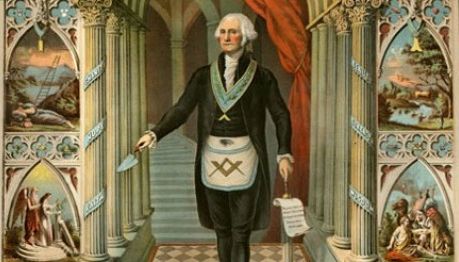
AMERICA’S Founders, despite their evident virtues, held disdain for the religion that was — and is — the basis of Western civilization. Indeed they rejected, in keeping with their rationalist and Masonic worldview, all submission to religion in the new government based on the pervasive and enthralling slogans of freedom.
America was revolutionary. And theirs was a revolution against Christendom.
Despite these facts, Robert Prevost, known as “Pope” Leo XIV, could not find enough positive to say about them in his recent message to Americans on the occasion of the country’s 250th anniversary:
I extend my heartfelt congratulations to all Americans on the occasion of the 250th anniversary of the signing of the Declaration of Independence. This semiquincentennial marks that defining moment in the history of the United States of America, July 4, 1776, that gave enduring voice to the ideals of liberty, equality, the pursuit of happiness, justice and democratic self-government.
For two and a half centuries, generations of Americans have worked together to carry these principles forward — through sacrifice, service, innovation and civic participation. This anniversary stands as an invitation not only to celebrate the nation’s remarkable journey, but also to reflect upon the responsibilities that the sons and daughters of this country bear to one another, and to the generations who will inherit the nation that is being shaped today.
“Liberty,” “equality,” the “pursuit of happiness” as the foremost aim of life — these are “Enlightenment,” deist principles. Have they led to liberty? Have they led to equality? Have they led to happiness? These are interesting issues to ponder at this time, a time when ‘democratic self-government’ has been reduced to the right to pay your tax bill in installments instead of all at once or your right to educate your child at home at considerable expense instead of sending him to the school you are paying for where he will be mentally warped for life. The issue of whether we have separation of church and state is also an interesting question, particularly as the state religion of anti-racism further restructures our world.
A true pope might have drawn attention to the spiritual impoverishment these ideals have created, the economic centralization, the demonization of Christian virtues and civilization that bombards Americans everyday and the quasi-totalitarian government so much Masonic freedom has enabled. Prevost, however, seemed unaware that Americans live under a level of government control and interference the early colonists surely could not in their worst nightmares have envisioned as the outcome of their valiant military sacrifices.
Prevost continued:
Among the most cherished of these principles is religious freedom — the right of every person to worship according to conscience and to practice their faith openly, without coercion or fear. In marking this anniversary, it is important to recognize that freedom of religion has long been central to the American promise, protecting both individual dignity and the peaceful coexistence of a diverse people.
This same freedom has permitted the Catholic Church to take root and flourish within the United States, to the advantage not only of her own members, but of the entire nation.
The best that can be said about the “religious freedom” Mr. Prevost praises is that it prevented the likes of John Adams and a multitude of fanatics against the Catholic Church from ordering the few Catholics to the gallows. (Thomas Jefferson had no apparent sorrow for those killed in revolutionary France.)
Other than that benefit, it led to the conversion of American Catholics into ardent believers in secularism and unofficial Freemasons, with a creed of Jewish materialism, “the pursuit of happiness,” and individualistic rebellion against God animating their spiritually bankrupt lives and creating very uncertain outcomes for their lives in the hereafter. This conversion of Catholics to Masonry and materialism was highly influential, perhaps even decisive, in the Revolution that occurred in 1965 in Rome.
Prevost placed within his encomium to freedom a plea for more governmental oppression for Americans, the majority of whom reject the invasion of the Third World forced on their communities and nation. Prevost is all for it. He wrote:
Defending human life also includes welcoming, protecting and assisting immigrants, whose hopes, sacrifices and contribution have formed part of the history of this country from its very beginning. In every generation, those who have arrived seeking freedom, opportunity and a place to belong have helped to shape the nation’s character. To receive them with compassion and generosity is not only an act of charity, but also a recognition of the dignity that belongs to every human person.
One of the worst things about this idea that open borders are a Christian duty is that it is a slander against the Catholic Church since many people believe Prevost represents the Catholic Church, when he does not.
The Church, in contrast, has always consigned the issue of national borders to the domain of civil law, for which nations have autonomy, and has never welcomed the invasion of any country, certainly not the invasion of any country by non-Christians. Furthermore, the Catholic Church rejects the socialist principle of the equalization of wealth which motivates this plea for more immigration. That residents of poor countries have the right to move to wealthier countries and be subsidized for it is a Communist, Masonic and socialist idea, not a Catholic one.
In other words, beneath Prevost’s praise for freedom is the totalitarian boot in the face. This is not Catholic, This is not humane. And this is not freedom.
Prevost represents a godless, global elite that despises the common man of Western tradition.
Many Catholics, so weak in their formation, will hear Prevost’s speech and be satisfied enough that he mentioned opposition to abortion. For them, the Catholic faith has been reduced to this one moral issue, important indeed but hardly the sum of its philosophy or its opposition to modern “freedom.”. Americans are surrounded by a swarm of moral evils that has led to a level of domestic chaos and demographic decline that the early colonists who fought for “freedom” also could not have imagine. (Hypocritical it is on Prevosts’s part to mention it since he embraces the principles of feminism behind it.)
A true pope on the 250th anniversary of this country would ideally extend warmth and charity to its citizens, assure them that the Church seeks not to force them into its law of love, but use the occasion to educate them perhaps about the false principles which formed the basis for the first nation in the history of the world to reject any semblance of obedience or deference to God in public affairs, as did Pope Leo XIII in the 19th century:
In a mad attempt to emancipate itself from God, civil society rejected the supernatural and divine revelation, thus withdrawing itself from the life-giving efficacy of Christianity, that is, from the most solid guarantee of order, the most powerful bond of fraternity, the inexhaustible source of individual and public virtues; and the upheaval of practical life depends on this nascent apostasy. (Pope Leo XIII, Humanum Genus)
Let’s pray for an America suffering from so much “freedom.”


