A Homily by St. Peter Canisius, the Priest De Maria Deipara Virgine, lib. 5, c. 6
The Church frequently and reverently keepeth feastdays dedicated to the Mother of God, realizing that it is a work pleasing to God and worthy of the faithful if many feasts, with fixed dates and public ceremonies, are celebrated in honour of the most blessed of all the blessed in heaven, the Mother of our Lord and God. Among all these feasts which have been celebrated so devotedly for so many years, even unto the present day, the Feast of the Assumption is considered the greatest and holdeth chief place. Indeed there was no happier or more joyful day for Mary, if we duly consider the happiness of both body and soul granted to her on that day. Then especially, as never before, her spirit, soul and body rejoiced wondrously in the living God and she could rightfully say: He hath regarded the lowliness of his handmaiden; for behold, all generations shall call me blessed; for he that is mighty hath magnified me.
Ave Maria, gratia plena, Dominus tecum. Benedicta tu in mulieribus, et benedictus fructus ventris tui, Iesus. Sancta Maria, Mater Dei, ora pro nobis peccatoribus, nunc et in hora mortis nostrae. Amen.
Arise! the cold blasts from earth have receded,
And in the field are lovely flowers smiling,
For thee, O gracious Mother, bearer of Life,
Arise, O Mary!
Beautiful Lily blooming ‘mid the brambles,
Death’s haughty author thou alone didst conquer,
Plucking life-giving tree of fruits the fathers
By sin did not taste.
Ark of sweet wood not destined for ruin,
Holding the manna, whence springeth forth the power
Summoning forth the bones again arisen
From depths of the tomb.
Thou handmaid, faithful to the Ruler of hearts,
Thy flesh cruel decay could never touch,
Thy soul of Spirit partaking without end,
Hath winged to the stars. (more…)
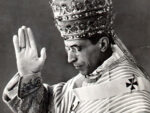
POPE Pius XII declared the dogma of the Assumption of the Blessed Virgin Mary on Nov. 1, 1950, with more than 600 bishops and 700,00o Catholic faithful in attendance.
Since indeed the universal Church hath at all times and throughout the ages manifested faith in the bodily Assumption of the Blessed Virgin Mary, and since the Bishops of the whole world by an almost unanimous agreement have petitioned that this truth, which is enshrined in Sacred Scripture and deeply rooted in the souls of Christ’s faithful, and is also truly in accord with other revealed truths, should be defined as a dogma of the divine and Catholic Faith, Pope Pius XII, acceding to the requests of the whole Church, decreed that this privilege of the Blessed Virgin Mary be solemnly proclaimed, and thus, on the first day of November of the year of the Great Jubilee, nineteen hundred and fifty, at Rome, in the open square before the Basilica of St. Peter, surrounded by a throng of many Cardinals and Bishops of the Holy Roman Church who had come from distant parts of the earth, and before a great multitude of the faithful, with the whole Catholic world rejoicing, proclaimed in these words and with infallible statement the bodily Assumption of the Blessed Virgin Mary into heaven: Wherefore, having offered to God continual prayers of supplication, and having invoked the light of the Spirit of Truth, to the glory of Almighty God who hath enriched the Virgin Mary with his special favour; in honour of his Son, the immortal King of ages and victor over sin and death; for the increase of the glory of the same august Mother, and for the joy and exultation of the whole Church, by the authority of Our Lord Jesus Christ, of the holy Apostles Peter and Paul, and by our own authority, we pronounce, declare and define it to be a divinely revealed dogma that: The Immaculate Mother of God, Mary ever Virgin, was, at the end of her earthly life, assumed body and soul into heavenly glory.
— From the Acts of Pope Pius XII
Today is the glorious Feast of the Assumption. We cannot participate in jubilant processions such as this, but we can rejoice ever more in our hearts.
My heart hath uttered a good word; I speak my works to the King. My tongue is the pen of a scrivener that writeth swiftly. Thou art beautiful above the sons of men: grace is poured abroad in thy lips; therefore hath God blessed thee for ever.
“MARY’S death … leaves no impression but peace; that death had no other cause than love. Being a mere creature, she could not deliver herself from that claim of the old enemy; but leaving her tomb filled with flowers, she mounts up to heaven, flowing with delights, leaning upon her Beloved. Amid the acclamations of the daughters of Sion, who will henceforth never cease to call her blessed, she ascends surrounded by choirs of heavenly spirits joyfully praising the Son of God. Nevermore will shadows veil, as they did on earth, the glory of the most beautiful daughter of Eve. Beyond the immovable Thrones, beyond the dazzling Cherubim, beyond the flaming Seraphim, onward she passes, delighting the heavenly city with her sweet perfumes. She stays not till she reaches the very confines of the Divinity; close to the throne of honor where her Son, the King of ages, reigns in justice and in power; there she is proclaimed Queen, there she will reign for evermore in mercy and in goodness…”
— Dom Prosper Guéranger, The Liturgical Year, “The Feast of the Assumption of the Blessed Virgin Mary” (more…)
“THE same applies to the notion of Fraternity which they found on the love of common interest or, beyond all philosophies and religions, on the mere notion of humanity, thus embracing with an equal love and tolerance all human beings and their miseries, whether these are intellectual, moral, or physical and temporal. But Catholic doctrine tells us that the primary duty of charity does not lie in the toleration of false ideas, however sincere they may be, nor in the theoretical or practical indifference towards the errors and vices in which we see our brethren plunged, but in the zeal for their intellectual and moral improvement as well as for their material well-being. Catholic doctrine further tells us that love for our neighbor flows from our love for God, Who is Father to all, and goal of the whole human family; and in Jesus Christ whose members we are, to the point that in doing good to others we are doing good to Jesus Christ Himself. Any other kind of love is sheer illusion, sterile and fleeting.
“Indeed, we have the human experience of pagan and secular societies of ages past to show that concern for common interests or affinities of nature weigh very little against the passions and wild desires of the heart. No, Venerable Brethren, there is no genuine fraternity outside Christian charity. Through the love of God and His Son Jesus Christ Our Saviour, Christian charity embraces all men, comforts all, and leads all to the same faith and same heavenly happiness.
“By separating fraternity from Christian charity thus understood, Democracy, far from being a progress, would mean a disastrous step backwards for civilization. If, as We desire with all Our heart, the highest possible peak of well being for society and its members is to be attained through fraternity or, as it is also called, universal solidarity, all minds must be united in the knowledge of Truth, all wills united in morality, and all hearts in the love of God and His Son Jesus Christ. But this union is attainable only by Catholic charity, and that is why Catholic charity alone can lead the people in the march of progress towards the ideal civilization.”
— Pope St. Pius X, Notre Charge Apostolique, August 25, 1910
Do-Gooders who are out to make the world over like to advise older people not to live in the past. That is hilarious.
Not to live in the past — as against what? The increasing ugliness of the culture outside? The supine willingness of grown men and women to go along with trendiness instead of stand firm by timeless moral and esthetic standards?
“Real life today?” And precisely what is “real life today?” It is a festival of inanities and imbecilities, each more preposterous than the next. Why would any self-respecting person wish to live among people who celebrate those things?
I’m confident that many of your older readers will agree with me if I say that memory offers at least some refuge from those indescribable horrors. Memory is the land where we exclude those things in a glorious act of discrimination. Memory is the land where we build our interior castle. Memory is “the land where the good songs go” (Jerome Kern, 1917). It is the land where the good people go and where we keep them until we join them.
The past—the eternal past—may be the only place where decent people and a sensible tempo and texture of life can be found. (more…)
“SOCIETY will develop a new kind of servitude which covers the surface of society with a network of complicated rules, through which the most original minds and the most energetic characters cannot penetrate. It does not tyrannise but it compresses, enervates, extinguishes, and stupefies a people, till each nation is reduced to nothing better than a flock of timid and industrious animals, of which the government is the shepherd.”
“THERE are many who have self-control, which do keep themselves from lusting after things outward, whose hope beareth them to things inward, who chastise the flesh, who long with intense home-sickness for their Fatherland which is in heaven, who seek an eternal reward, and who will not to receive for their labours the praise of men. These are they who reckon their glory, not in the mouths of men, but in the testimony of their own conscience. And many there be likewise who afflict the body by self-control, and yet who seek for their self-control applause from men.”
“NEVER forget that the way which leads to heaven is narrow; the gate leading to life is narrow; that there are but few who find it and enter by it; and if there be some who go in and tread the narrow path for some time, there are but very few who persevere therein.”
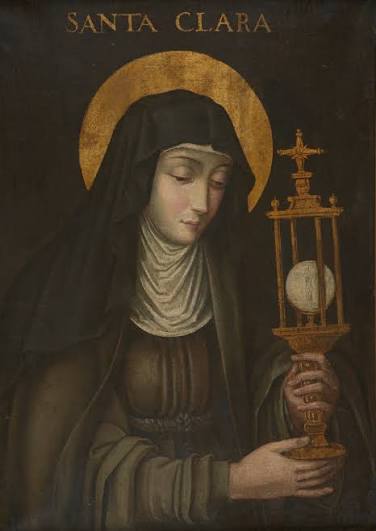
“THAT she might wax stronger in spirit by keeping the body down, she made her bed on the bare ground, sometimes with little twigs, and with hard wood for a pillow. Her dress was a gown and cloak of mean and rough cloth, and she sometimes wore hair-cloth next the skin. She bridled herself with such abstinence, that for a long time she took no bodily nourishment whatever upon three days in the week. Upon the remaining days she ate so little that the others wondered how she lived. As long as her health allowed it, she kept two Lents every year, during which she fasted upon bread and water. Moreover, she was instant in watching and prayer, wherein she chiefly spent both her days and nights. She suffered from constant illnesses, and when she could not herself rise to bodily work, she sat up with the help of the sisters, and with her back propped, worked with her hands, that she might not be idle even in the midst of her weaknesses. She was an eminent lover of poverty, from which no need ever made her swerve, and she persistently refused the possessions which were offered to the sisters by Gregory IX. for their support.”
Foundress of the Franciscan Nuns of the Second Order, the Poor Clares. They walked bare-footed, slept on the ground, observed perpetual abstinence, and made poverty the basis of their lives, so that by detachment they might give themselves more to God.
MY heart hath uttered a good word; I speak my works to the King. My tongue is the pen of a scrivener that writeth swiftly. Thou art beautiful above the sons of men: grace is poured abroad in thy lips; therefore hath God blessed thee for ever. Gird thy sword upon thy thigh, O thou most mighty. With thy comeliness and thy beauty set out, proceed prosperously, and reign. Because of truth and meekness and justice: and thy right hand shall conduct thee wonderfully. Thy arrows are sharp: under thee shall people fall, into the hearts of the king’s enemies. Thy throne, O God, is for ever and ever: the sceptre of thy kingdom is a sceptre of uprightness.
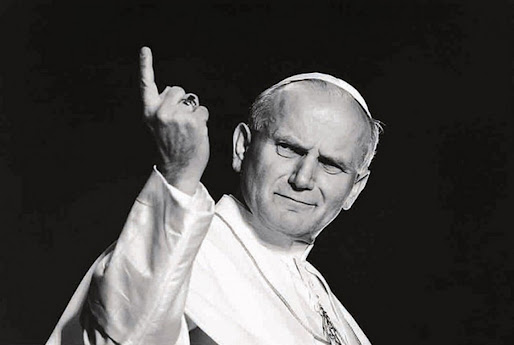
ATPro Deo et Pontifice, an ongoing series examines the extensive ‘heresies, errors and novelties” in the catechism introduced by Karol Wojtyla, otherwise known as Pope John Paul II, another anti-Vicar of Christ who was a committed enemy of the very institution he supposedly led.
Don’t miss the links at the end of the post, which also include dozens of entries on the heresies and deliberate distortions in the Vatican II documents. The idea that the Council did not explicitly reject Church teaching and was only misinterpreted is, as you can see, nonsense. Use your browser’s translator to read in English.
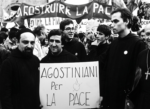
Robert Prevost (right) at a peace rally in Rome in 1983, organized by a coalition of pacifist groups, including organizations connected to the Italian Communist Party.
IF IMAGE and celebrity were everything, if truth was determined by vote or acclaim, than Robert Prevost would be pope of the Catholic Church, Vicar of Jesus Christ on earth.
But truth does not always correspond to image.
The truth is that Prevost is not Pope. He is not even Catholic. A basic familiarity with the beliefs of the Catholic Church for almost 2,000 years can easily discern this fact. Prevost is an aging Marxist hippie who looks nice in papal dress and uses the remaining wealth of the true Church and the resources of the gullible, hoodwinked and uninformed masses to promote a One World religion that proclaims the “People of God” their own messiah, obviating the need under this system for any pope at all. He and his predecessors in this religion are smooth-talking Bolsheviks who have smashed Catholic altars to smithereens and obliterated the entire juridical structure of the Church. Their popularity and success mean absolutely nothing in the eyes of God. It doesn’t matter how many babies they’ve kissed, how many hands they’ve shaken, how many books they have produced, how many countries they’ve visited, how many celebrities they’ve welcomed through their doors, how many times they have claimed to say Mass, how many packed auditoriums or stadiums they have addressed. It doesn’t matter how many millions are so scandalized by this difficult truth that they reject it. All this is nothing. Catholicism is a religion of the cross, and the vast majority, like the Pharisees of old who refused to accept a Messiah who would not be an earthly king, refuse it. Their Church must be a glorious earthly kingdom with a celebrity at its head, or they will not have it. The biblical prophecies, the teachings of the saints and Fathers of the Church who said everything would be taken away from them before the end, do not impress.
Then who is pope? Do we have a pope?
Yes, we do.
Pope Pius XII, who died in 1958, rules still during this extended vacancy of the papal chair that began that same year. He rules through his living legacy, the cumulative and infallible decrees of all of his predecessors. He is today the true pope of the Catholic Church, not physically in power, but morally and supernaturally.
Papal supremacy is the “cohesive center” that holds not just the Catholic world together, but all of human life. From “Pastor Aeternus“:
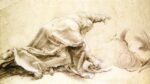
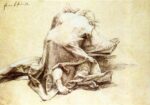
An Apostle from the Transfiguration, Matthias Grunewald; 1511
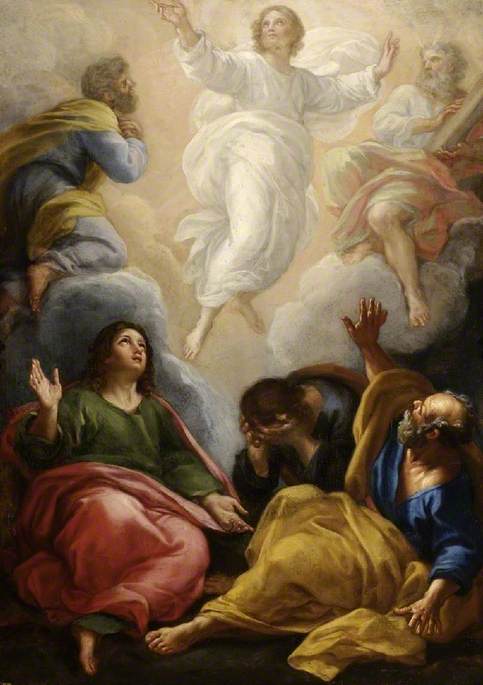
“CONSIDER 3dly, how St. Peter being out of himself, with the joy of this vision, was desirous to be always in the same happy situation, and always enjoying the like glory; and therefore he cried out, ‘Lord it is good for us to be here; not knowing, saith St. Luke, what he said, cn. x. 33. Because though it was inconceivably delightful to see and enjoy (though for a short time) the least glimpse of heavenly light and glory; yet as this present life was not to be the time of enjoyment, but of labours and of sufferings; and the Son of God Himself was to enter into His glory, by labours and sufferings (Luke xxiv. 26.); it was inordinate to desire here for a continuance, that which was reserved for here after: and for such only as should be entitled to it by labours and sufferings. Learn from hence, O my soul, with regard to divine consolations, and such like favours, that though thou art to receive them when given, with humility, gratitude and love, admiring the goodness and bounty of God, who is pleased thus to look down upon thee, the most unworthy of sinners: yet art thou not to set thy heart upon them, nor to be disturbed and discouraged, when they are taken away: for merit and perfection consists not in them, but in working, suffering and loving; and for the time of this mortal life, ordinarily speaking, it is far better for thee to be with thy Lord upon Mount Calvary, than upon Mount Thabor.
“Conclude instead of being eager after these transitory consolations, which at the best are but as small drops of water that fall from the clouds of Heaven, to refresh us for a moment in this dry desert, through which we are now travelling; to aspire rather continually after that great overflowing river above, which gives joy without end to the City of God; and which alone is capable quenching thy thirst and satisfying thy soul.”
An Apostle from the Transfiguration, Matthias Grunewald; 1511
“BUT we must again remark upon the very astonishing predilection which the Adorable Jesus showed for the hidden life during the years in which He lived in public and conversed with men. It was His delight to pass whole nights in prayer in secluded spots; if He sees Himself surrounded by a multitude, He withdraws and escapes into the mountains; if He would repose from His labours, He retires into the desert. He keeps aloof from towns and large assemblies; He enjoins silence on those who witness His greatest miracles. If He goes into the Garden of Olives, to suffer there an agony inexpressible, He takes with Him but three of His disciples; and again He separates Himself even from them, that His Father alone may behold His exceeding sorrows. True it is that on Thabor He manifested some rays of His glory, but observe: it is in a place apart, and, His mind and heart being all the while on Calvary, He discourses only on the ignominies of His Passion. It would seem as if He wished to veil the brilliancy of His glories with the intensity of His humiliations. Moses and Elias appear with Him on this holy mountain, and, instead of descanting with admiration and astonishment on the splendour, the beauty, and the glory of the Adorable Jesus, they are occupied only with the dreadful sufferings of His cross, and speak of nothing else. Jesus Himself (as has been already remarked) seems desirous, by discoursing immediately afterwards on the shame and ignominies of His death, to remove from the minds of His most favoured Apostles the memory of what they had seen.”
“WHILE the face of Jesus shone as the sun, His garments became white as snow. Now these garments so snow-white, as St. Mark observes, that no fuller on earth could have bleached them so, are the just men, the royal ornament inseparable from the Man-God, the Church, the seamless robe woven by our sweet Queen for her Son out of the purest wool and most beautiful linen that the valiant woman could find. Although our Lord personally has now passed the torrent of suffering and entered forever into his glory, nevertheless the bright mystery of the Transfiguration will not be complete until the last of the elect, having passed through the laborious preparation at the hands of the Divine Fuller, and tasted death, has joined in the Resurrection of our adorable Head. O Face of our Savior that dost ravish the heavens, then will all glory, all beauty, all love shine forth from thee. Expressing God by the perfect resemblance of true Son by nature, thou wilt extend the good pleasure of the Father to that reflection of his Word, which constitutes the sons of adoption, and reaches in the Holy Ghost even to the lowest fringes of his garment which fills the temple below him.”
—- Dom Prosper Guéranger, “Transfiguration of Our Lord,” The Liturgical Year