Modern Theology in Stone
WHY are modern Catholic churches so hideous and desolating? In short, these spaceships are not Catholic. See the post at Novus Ordo Watch.
Comments Off on Modern Theology in Stone
August 17, 2014

WHY are modern Catholic churches so hideous and desolating? In short, these spaceships are not Catholic. See the post at Novus Ordo Watch.
IN an article that appeared in The American Thinker last April, Robert Oscar Lopez, who was raised by lesbians, wrote: Gay parenting is built on sheer adult selfishness, but too many conservatives are scared of saying so because they have family members and colleagues they don’t want to offend. It wouldn’t be so bad if they chose to live in silence but at least supported those of us who are willing to call people out for doing things that are wrong. Yet when I say things like this, conservatives get scared; the radio silence deepens, and I end up in Europe again. Europe is another world entirely. The French fill the streets and fight gay adoption – not because they are arguing for more civil discourse, but rather because kids have a right to a mom and a dad, and it is urgent to fight people who violate that right. They invoke the history of slavery when they see people who want to import children conceived by Indian surrogates. They compare lesbians engaging in sperm-banking and genetic design schemes to Nazi eugenicists, because the parallel is obvious. They refer to homosexual adoption as child abuse and remind people that it’s cultural genocide and a violation of international law to use children to engage in social experiments that will alienate them from the civic traditions of their biological parents.
Watch the latest video at video.foxnews.com HERE is terrific analysis from a wild-eyed, black "minister" named Johnathan Gentry. He criticizes Al Sharpton, the NAACP, and Obama. "We're just going around in a cycle, year after year, decade after decade. Excuses, excuses, excuses," he says. Of the police officers defending blacks from criminals, he says, "My heart goes out to them." Of Obama, he says, "Where were you in Chicago on Fourth of July weekend when there were 16 drive-by shootings. You're not there for the black community." He says Michael Brown would never have been shot if he had obeyed the police officer's simple order. The Fox interviewers are truly obnoxious. They call his statement a "rant" and suggest he is "giving in" and is "extreme."

ACCORDING to the latest from the Ferguson, Missouri police department, Michael Brown, the teenager killed by an officer last Saturday, was not the “gentle giant” he has been widely reported to be. The police account contradicts the report by Brown’s friend, Dorian Johnson, who never mentioned anything about a robbery and said the two had been accosted by the officer simply for walking in the middle of the street. Here is the latest from Fox News:
A suburban St. Louis police chief on Friday identified the officer whose fatal shooting of an unarmed black teenager ignited days of heated protests, and released documents alleging the teen was killed after a robbery in which he was suspected of stealing a $48.99 box of cigars.
Ferguson, Mo., Police Chief Thomas Jackson said that the robbery took place just before noon on Saturday at a nearby convenience store roughly 10 minutes before a police officer identified as Darren Wilson fired the bullet that killed Michael Brown. Police say that the shot was fired after a struggled touched off by Wilson’s confronting Brown. Jackson said Wilson is a six-year veteran with no disciplinary action on his record. (more…)
Hail Mary, Full of Grace. The Lord is with thee. Blessed art thou among women, and blessed is the fruit of thy womb, Jesus. Holy Mary, Mother of God, pray for us sinners now, and at the hour of our death. Amen.
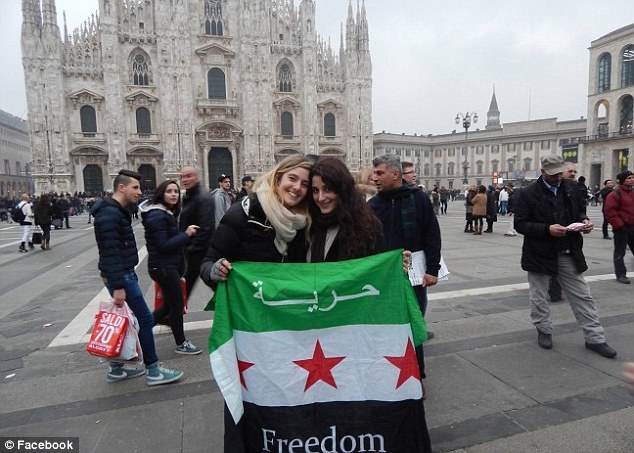
MASON K. writes:
Two Italian college students flew to Syria, against their parents’ wishes, and have now been captured by militant Islamists. I don’t like to contemplate what is happening to them now.
As gruesome as this is, I thought it fits your current theme of “summer victims” and your perennial theme of the Eloi tax.
By the way, I’m a first-time commenter, but I’ve been reading your blog, on and off, for some time. I am a relatively young man at 29, and I had never encountered any thoughtful conservative opinions until just a few years ago. (more…)
ONE gets the impression from the news that the homosexual agenda is approaching almost universal acceptance. At Tradition in Action, Stefano Gennarini writes:
The most powerful countries and institutions in the world promoting homosexual “rights” are finding resistance even where gay activists thought the battle had been won.
The goal of normalizing same-sex relations through legislation is hitting roadblocks in legislatures, courts, and among people around the globe. (more…)

GEORGE W. writes:
I am an avid reader of your blog. You have been influential in my evolving thoughts and opinions on society and its structure. Suffice it to say that I am a strong traditionalist and always have tended toward conservatism in political and life philosophy (not the degenerate “neo-con” variety that is practiced by so-called conservatives on the national level). In this, my interests have led me toward the application of judgment, based on traditionalist values, of personal human behavior. My interests are such because I have held grave self-doubts about my worth and value to society for some time now, and I would like your opinion from a traditionalist perspective on these matters, since I respect your insight greatly.
KIDIST PAULOS ASRAT recently wrote about the storied hotel in New York City.
SUNSHINE MARY writes:
Unfortunately, I have another addition from my home town to your Summer Victims post.
Scott Simerson, who was white, was beaten and kicked while watching some kids on a playground in Grand Rapids, Michigan in May. He was defenseless and police say the attack was unprovoked. He finally died from his injuries this past Sunday. Four black males allegedly ganged up on him. The two who are being charged in the crime are Robert Kelly and Donmard White.


THOMAS F. BERTONNEAU writes:
It is surprising that there are not more celebrity suicides. A celebrity is a human being commoditized, as the Marxists like to say, and thereby robbed of the self that he or she might develop in the course of life normally lived. At the beginning, the celebrity-to-be is probably pitiable because he or she is the victim of his or her agents, managers, publicity spokesmen, and so forth, whose collective design of marketing the person as though he or she were a product entails depriving that person of personhood. At some point, however, when the celebrity-to-be achieves actual celebrity and begins to identify with dehumanized object-of-celebration, he or she becomes culpable in the charade and loses the privilege of being pitied. Commercial culture creates narcissists, many of whom are destructive narcissists, dangerous not only to themselves but to those near to them.
The narcissist is interesting to other people because he or she, showered constantly with orchestrated adulation, appears to the narcissist in everyone to validate narcissism. But the narcissist is a hollow person, a being of demonic emptiness, which cannot exist except by a constant infusion of one-way admiration.
Robin Williams always struck me as the epitome of the mass-entertainment celebrity-narcissist. His early nightclub and late-night television standup routines were addressed to the “hip” audiences, overwhelmingly young, of the 1970s and 80s, whom they impressed as “edgy’ because they were so frantic, incoherent, and seemingly cocaine-driven. According to the rumors, they often were cocaine-driven.

YOU can see Dorian Johnson’s description of the Michael Brown shooting here. In my opinion, he appears to be telling the truth.
THERE must be few fates worse than being a movie star today. Think of having to spend your life in that galaxy of black holes and bright, shining anti-stars. Think of that world of brutal competition and expensive divorce, that vast field of stumbling alcoholics, suicides, and drug addicts with their fitness trainers, oceanfront palaces and the latest in cosmetic dentistry. The average movie star spends thousands of hours in the dentist's chair, millions of hours on the treadmill, trillions of hours lifting weights. Whenever I see celebrities on the red carpet at awards ceremonies, like Greek gods lining up for deadly sport, I think of all the dull hours these semi-divines had to spend looking at themselves in the mirror or getting fitted for their costly shreds of clothing. All for the sake of movies that involve real artistry and technical virtuosity but are more often than not still bad movies. Talk about selling your soul. There is no rehab center that can keep these gods from weeping.
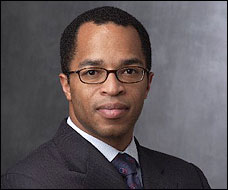
JONATHAN CAPEHART, of the Washington Post, says that he might someday be killed by a policeman too. He writes:
When you’re black and especially male — in the United States — you have to go to these seemingly overboard, extra lengths in the off-chance they might save your life. But none of those things would have helped me if I were in the shoes of Michael Brown or Renisha McBride or Trayvon Martin. We don’t know yet if Brown was asked for identification, but we know the other two weren’t. Perhaps their assailants saw all they needed to know.
What frightens me more than anything in the world is that the chances are very high that one day I might be in their shoes and might meet their tragic end. The so-called victims of the nonexistent “war on whites” have absolutely NO idea what living under that kind of siege, that kind of very real threat, is like.
Statistically, I believe it is much more likely that Mr. Capehart will be killed by a black mugger. Most of those protesting the shooting face a much greater likelihood of being killed by their neighbors or friends.
LYDIA SHERMAN writes at Home Living:
In this day of the “social gospel,” the common courtesy of a handshake has fallen by the wayside. Everyone must be exhuberantly hugging, instead. Will the handshake ever be recovered? There was a time when a handshake was the sharing of something great and a high honor. Today it seems to be considered too trivial, but how did the historical and dignified handshake ever become not good enough?