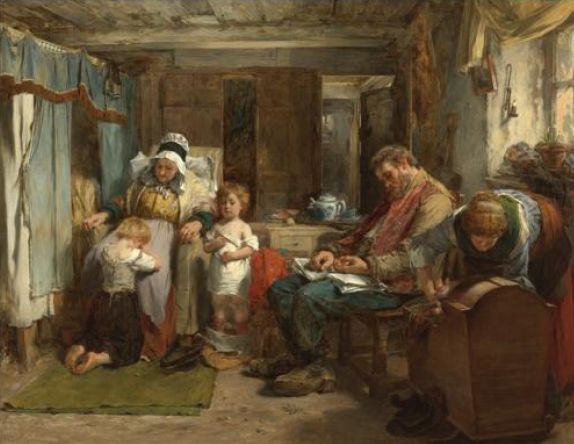
She Didn’t Want to Be a Victim

TROLLING through the archives, I found a 2015 post about Booker T. Washington and W.E.B. Dubois — food for thought this Black History Month. But I was especially drawn to the remarks of  commenter Renée from View from the Right:

I am a (mostly) black woman who has white relatives and grew up in a predominately white Midwestern town. I went east to a very liberal college. Nothing prepared me for white liberal students’ need to verify that I was a victim of racism at every turn, and that I felt blacks were being kept out. There were very few blacks at this school, most of them slightly conservative, and we all agreed on one thing: the reason there were so few blacks there was that a school practically in the wilderness with no business program could not attract a lot of blacks. The lack of blacks was not due to racism. No white liberal would believe me on this point. I was constantly asked what it was like to be a black at this school and whether I felt uncomfortable around so many whites. I quickly learned to avoid white people obsessed with the black experience. They were only interested in being entertained by me (they would compare the black students to each other and favor those who were the most ‘hood) or in finding in me an object for their paternalism. Many blacks did not see through this. (more…)

Comments Off on She Didn’t Want to Be a Victim

Poetry vs. Science

"AS science makes progress in any subject-matter, poetry recedes from it. The two cannot stand together; they belong respectively to two modes of viewing things, which are contradictory of each other. Reason investigates, analyzes, numbers, weighs, measures, ascertains, locates, the objects of its contemplation, and thus gains a scientific knowledge of them. Science results in system, which is complex unity; poetry delights in the indefinite and various as contrasted with unity, and in the simple as contrasted with system. The aim of science is to get a hold of things, to grasp them, to handle them, to comprehend them; that is (to use the familiar term), to master them, or to be superior to them. Its success lies in being able to draw a line round them, and to tell where each of them is to be found within that circumference, and how each lies relatively to all the rest. Its mission is to destroy ignorance, doubt, surmise, suspense, illusions, fears, deceits, according to the "Felix qui potuit rerum cognoscere causas" of the Poet, whose whole passage, by the way, may be taken as drawing out the contrast between the poetical and the scientific. But as to the poetical, very different is the frame of mind which is necessary for its perception. It demands, as its primary condition, that we should not put ourselves above the objects in which it resides, but at their feet; that we should feel them to…

Comments Off on Poetry vs. Science

The Utopian

Utopien 04, Makis E. Warlamis

THE UTOPIAN does not believe in the perfectibility of individuals. He is quite pessimistic about the individual. Instead, he believes in the perfectibility of society. The collective can — and must — evolve in order to ensure individual and universal happiness.

The very finiteness of the individual life offends the utopian. He demands immortality, not in another world, but in the right social system. He is zealously optimistic when it comes to what human beings can achieve under the enlightened rule of social engineers or “philosopher kings.”

Understanding the utopian mentality is very important because it is so common today and has strongly influenced all of our lives. The idea, for instance, of controlling the climate through social action, global no less, is utopian to the core.

Étienne Cabet, a 19th-century French philosopher, was one of many thinkers who envisioned utopia. In his Travels to Icaria, he described communities of complete human equality, group ownership and workers cooperatives:

Stables, hospitals, bakeries, factories and warehouses are all on the outskirts of the city, and the inhabitants live in the centre, where the streets are clean, broad and straight. The houses, clustered with balconies, are never more than four stories high … The government is communitarian. The Republic of Icaria is in charge of administration and public services, for instance, but the laws are made by the citizens according to the dictates of their needs and consciences. (Dictionary of Imaginary Places; Macmillan Publishing Co., 1980; p. 173)

Icarians established real communes in Missouri, Iowa and California before the experiment faded away.

In The Republic, his famous dialogue, Plato described the ideal city-state ruled by a philosopher king and where all human reproduction and child-rearing is regulated by the state, so that parents do not know their own children. But utopian thinking predates Plato. It has existed since the beginning of human society — and it will always exist, as Thomas Molnar says in his outstanding book Utopia: The Perennial Heresy. You might call Eve the very first utopian, for she was snared by the promise of a better world, in which she would “know good and evil.” The serpent did not offer riches or beautiful objects. He offered her abstractions. He offered her enlightenment. It is from the first human beings that we inherited “the utopian temptation.”

The utopian seeks political solutions to most human problems. He is willing to sacrifice freedom for the attainment of a long-term objectives. The end always justifies the means. Indeed, one finds very often that the utopian is willing to see his fellow citizens penalized, ostracized, imprisoned or even killed if they do not share the same vision and cooperate with the plan for the future, as is so common in Communist societies and as we recently saw around the world. There’s a fine line between utopia and dystopia — actually, no line at all. The utopian values equality, peace and brotherhood above all else. He does not like friction, but in order to achieve a friction-less society he is willing to create a great deal of friction. (more…)

Comments Off on The Utopian

Snow and the Woods

“Stopping By Woods on a Snowy Evening”
— by Robert Frost

Whose woods these are I think I know.
His house is in the village though;
He will not see me stopping here
To watch his woods fill up with snow.

My little horse must think it queer
To stop without a farmhouse near
Between the woods and frozen lake
The darkest evening of the year. (more…)

Comments Off on Snow and the Woods

A Solution to “Population Decline”

FEMINISM and predatory economics have had their inevitable (and desired) result. The birthrate among Americans, especially among whites, has declined. The solution promoted by the government and mass media? More immigration. You’ve heard about it ad nauseam.

But leaving aside the immense cultural consequences, this idea of using “migrants” to make up for a loss of native workers does not make sense economically. About 50 percent of immigrants are on welfare and they overwhelmingly come from countries with weak economies. They were not able to transform their own countries into success stories so how can they transform ours? (It’s also uncharitable, draining other countries of motivated, hard-working citizens.) That’s not to say immigrants, even illegal immigrants, have not contributed immense labor and good to this country. They have. They definitely have.

But a better solution to population decline in Europe and America at this particular point would be to do the exact opposite: Send millions of recent immigrants home and restore families, offering economic incentives for marriage and for women to stay home. If women in Africa can afford to have five children, why can’t women here? I do not suggest cruelty or banishment.

Let’s do what Africans are doing and send our migrants home. Mass deportation, in a gradual and humane form, may seem impossible, but consider:

People act like mass deportations are impossible but Algeria kicked out a million Whites (~12% of the population) in a couple of years after they gained independence [1] [2].

Similarly, Tunisia and Morocco each kicked out a quarter of a million Whites (~7% and ~5 of their populations, respectively) [3] [4] [5] [6].

Huge demographic turnovers can occur in the blink of an eye. Europeans were in North Africa for over a century but most non-Whites haven’t even lived in the West for a single decade. They could be sent home as quickly as they arrived.

Peacefully deporting them would, theoretically, be easy and inexpensive. Simply banning them from accessing welfare and making them pay to use public services (e.g. healthcare in Europe) would cause many to immediately self-deport.

Since over 50% of immigrants are on welfare, the money saved could then be used to finance deportation logistics. Even paying them a lump sum to leave would be cheaper than keeping them here. (Thuletide)

The goal of deportation shouldn’t be a racially pure society with no diversity, but a much more homogenous one, where the incentive to “be fruitful and multiply” is not stifled. Deportation needn’t, and shouldn’t, be cruel. Immigrants can be offered economic incentives to create a better life back home. It’s a win/win situation. Who are we to say that other countries should lose major portions of their populations so that we can have more waiters and farm hands? Really, the arrogance and, well, racism is glaring.

This is a solution, however, you will not see in the news. (more…)

Comments Off on A Solution to “Population Decline”

Blast from the Past

ON Dec. 26, 1960, the Philadelphia Eagles played the Green Bay Packers in the NFL Championship game at Franklin Field. It's a long, long way from there to this year's Super Bowl, where the luscious porn star Rihanna will entertain millions. Video clips from that game 63 years ago show a different world, a time when Americans were still civilized.  

Comments Off on Blast from the Past

Humanity as God

"SINCE the French Revolution "Liberty, Equality, Fraternity" has been the cry of revolutionaries. So what is wrong with liberty, equality and fraternity? Rightly understood, nothing. But one should know that the Revolution uses words in a perverted sense. In this instance Liberty means freedom from the laws of God; Equality means equality with God, Humanity-as-God; Fraternity means brotherhood among the Enlightened ... It might also mean brotherhood with Christ if He will not insist on His divinity. As the Pharisaic predecessors of the modern Sanhedrin put it, 'We will have no king but Caesar." --- W.F. Strojie, "The New Sandhedrin," 1974  

Comments Off on Humanity as God

The Indispensable Male Provider

"THE provider role of men not only gives the society the benefit of a lifetime of hard work oriented toward long-term goals. It also channels and disciplines male energies and aggressions that otherwise turn against that society. By contrast, full-time work by mothers of small children [and older children too] comes at a serious twofold cost: first, the loss of the immeasurable social benefit of the mother's loving care for her child; second, the frequent loss of the husband's full-time concentration on his career. The yield of the mother's job to the economy or the man's help in the home only rarely can offset these costs of her employment. The society will pay the costs one way or another: not only through tremendous outlays for day care but also through economic declines, population loss, juvenile delinquency, crime, mental illness, alcoholism, addiction and divorce. .... Family breakdown and demoralization  can occur with frightening suddenness when government policy destroys the role of the male provider in the family. The alternative to traditional family roles is not a unisex family; it is sexual suicide." -- George Gilder, Men and Marriage (Pelican, 2008); pp. 153-54  

Comments Off on The Indispensable Male Provider

Better Judged by God, than by Men

BE glad that it will be a divine tribunal, not a human tribunal, that you will stand before when all has fallen away.

As Fr. Frederick Faber wrote in The Creator And The Creature; Or The Wonders Of Divine Love (Richardson and Son, 1857), p. 388:

No one can look forward without very solemn apprehensions to his final judgment. Yet it is the deliberate conviction of our best thoughts and most mature reflection, that we had rather leave our final doom in the hands of the all-holy God than in those of the most merciful of sinful men. Our knowledge of God does not leave us room for a moment’s hesitation. Strange to say! intimately as we know our own wretchedness, and appalled as we often are by the vision of our own sins, our sense of security in the hands of God rises in great measure from the fact that He knows us better than any one else can know us. (more…)

Comments Off on Better Judged by God, than by Men

Simplicity

  "True simplicity is like that of children, who think, speak and act candidly and without craftiness. They believe whatever is told them; they have no care or thought for themselves, especially when with their parents; they cling to them, without going to seek their own satisfactions and consolations, which they take in good faith and enjoy with simplicity, without any curiosity about their causes and effects." —  St. Francis de Sales  

Comments Off on Simplicity

Sorry, Mom, I’m in Jail

IN 2011, Monika Schaefer, a violinist from Jasper, Canada and a former candidate for the liberal Green Party, began researching the events of 9/11. Her world was turned upside down when she discovered that the official narrative of that fateful day was not true and so troubled was she by the Green Party’s neglect of the issue she resigned.

A short time later, prompted by this discovery, she started researching the most famous event of World War II. The result was her video in the summer of 2016 titled, “Sorry, Mom, I Was Wrong about the Holocaust.” The video, a public apology to her deceased German mother for accusing her of being complicit in genocide, instantly went viral and was quickly censored on Youtube and social media.

The personal fallout was immense. The “inclusive” community of Jasper, where Schaefer had been well-liked and active as an artist and volunteer for over 30 years, turned out to be not that inclusive after all. She was harassed on the streets, barred from public venues and lost all of her private violin students. An unknown person wrote a wild, ranting letter in her name to all the businesses in town, portraying her as a disturbed bigot. The police refused to look into this forgery.

But things only got worse when Schaefer, 58, was arrested in January of 2018 while on a Christmas trip to Germany for making the video. She was formally charged with “incitement of the people.” She then spent ten months in a maximum security prison in Munich.

In honor of Holocaust Remembrance Day, readers might consider buying her engaging new book, which bears the same title as her video and in which she recounts these harrowing events. (more…)

Comments Off on Sorry, Mom, I’m in Jail

Avenue of Mercy

"MARY was made Mother of God to obtain salvation for many who, on account of their wicked lives, could not be saved according to the rigor of Divine justice, but might be saved with the help of her sweet mercy and powerful intercession." - St. John Chrysostom  

Comments Off on Avenue of Mercy

A Pandemic of Wealth Consolidation

FOR every one dollar of new wealth earned by a person in the bottom 90 percent since 2020, a billionaire gained roughly $1.7 million. "Billionaire fortunes have increased by $2.7 billion a day," according to a report by OXFAM. Not since World War II have the top one percent so benefited from world events. A deliberately contrived pandemic has led to a pandemic of organized theft. And, OXFAM wants to turn over a good portion of this wealth to the governments that are controlled by the robbers.  

Comments Off on A Pandemic of Wealth Consolidation

The Tale of One High School, cont.

ALAN writes: Eleven years ago, I wrote about the abandonment of the Cleveland High School building in south St. Louis. [“The Tale of One High School”, The Thinking Housewife, Jan. 18, 2012] It was a public high school. It has stood there for more than a hundred years, closed and abandoned since 2006.  Its huge size and architectural design and craftsmanship create the impression of a castle.  That—“The Castle”—is precisely what it was called and how it is remembered by generations of students who got a decent education there. These two pictures appeared last week on a public Facebook page about St. Louis History.  They show the school’s auditorium and stage as they look today, replete with advanced deterioration and vandalism.  I give credit where credit is due:  Such things are a credit to the hard work, professional dedication, and inestimable moral fiber of the St. Louis Board of Education and municipal government. (More on that subject below.) I sat in this very auditorium on many days in 1966-’67.  I sat there during the week in January 1967 when three American astronauts died in a fire at Cape Kennedy.  During the lunch hour, the cliques and the in-crowd always congregated down front near the stage and whooped it up.  That was why I always selected a seat in the outer row and near the back of the auditorium, just outside the view in these pictures.  I was not part of any in-crowd.  I tried to get as far away from…

Comments Off on The Tale of One High School, cont.