Barcelona, Charlottesville
VERY interesting and thoughtful analysis by Swedish researcher Ole Dammegard, interviewed here by Jeff Rense.
Comments Off on Barcelona, Charlottesville
August 29, 2017

VERY interesting and thoughtful analysis by Swedish researcher Ole Dammegard, interviewed here by Jeff Rense.
THIS DAY in the Church calendar is dedicated to the Beheading of St. John the Baptist, who wasted his time and died needlessly according to the theology of the Novus Ordo Church: For Herod himself had sent and apprehended John, and bound him in prison for the sake of Herodias, the wife of Philip his brother, because he had married her. For John said to Herod: It is not lawful for thee to have thy brother's wife. Now Herodias laid snares for him: and was desirous to put him to death, and could not. For Herod feared John, knowing him to be a just and holy man: and kept him, and when he heard him, did many things: and he heard him willingly. "And kept him": That is, from the designs of Herodias; and for fear of the people, would not put him to death, though she sought it; and through her daughter she effected her wish. And when a convenient day was come, Herod made a supper for his birthday, for the princes, and tribunes, and chief men of Galilee. And when the daughter of the same Herodias had come in, and had danced, and pleased Herod, and them that were at table with him, the king said to the damsel: Ask of me what thou wilt, and I will give it thee. And he swore to her: Whatsoever thou shalt ask I will give thee, though it be the half of my kingdom. Who when she…
J.P. STRALEY writes:
I read Alan’s remembrance of George and his comment on the small-screen fixation of younger people. I want to tell you why all these screens — TV, movies, and computer — are bad for young people.
First, I am writer of sorts. I make a story with words and give enough hints that the reader can erect what amounts to an image of the character’s personality and an image of the world he inhabits. Note the word “hint.” As a writer you can never include voluminous detail, the reader will fade way from you and put down the book. When this happens you’ve failed.
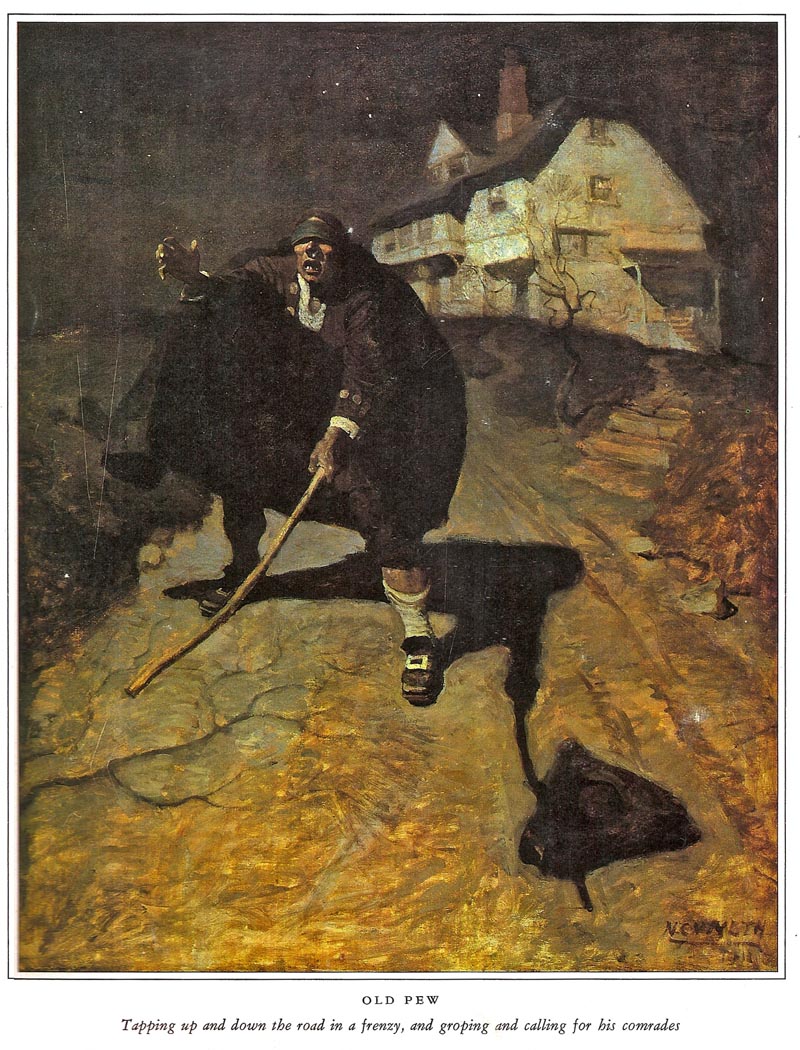
As a writer you give what amounts to clues, and the reader’s mind grasps these clues and puts together the image. The point here is that it is interactive. The reader is always interpreting and imagining as he reads the story. This trains the mind. You must pick up clues and interpret them, fast! Believe me, this is good for you. In children’s books you notice that for first graders there are plenty of images and few words. Move on to the third grade and there are a few images and more words. A person should be a mature reader by sixth grade, and books of that level have very few images and carry the story entirely by words. Books that tell stories in settings that may not be known to the reader have a few vivid images — think of Treasure Island, etc. (more…)
AN HISTORIC CATHOLIC school in Marin County, Ca. has removed more than 160 sacred statues of Jesus, Mary and the saints from school grounds. The statues, school officials said, made non-Catholic students feel uncomfortable.
WND reports:
The chair of the [San Domenico] school’s board of trustees, Amy Skewes-Cox, explained to the local paper that the move was made to help non-Christian students feel more welcome.
“If you walk on the campus and the first thing you confront is three or four statues of St. Dominic or St. Francis, it could be alienating for that other religion, and we didn’t want to further that feeling,” she said.
The removal of a statue of Mary and the Christ child from the school’s center courtyard was especially troubling to parents.
There’s a word for the ecumenism of the Vatican II Revolution in the Catholic Church. It’s atheism.
‘I’m okay. You’re okay. We’re all okay.’ And God, for all intents and purposes, does not exist.
More on San Domenico from Lifesitenews: (more…)
HENRY MAKOW considers Jewish reaction to the famous headline, above, on the firing of Steve Bannon: There is an incredible cognitive dissonance taking place when Jews hurl the aspersion "hate" at people who are simply resisting the hatred which is central to one of their most important religious texts, the Talmud. The essence of their other central text, the Kabbalah is that Jews channel God's will. They will redefine reality to serve their interests and perversions, and the goyim will be re-engineered and exploited accordingly. This is the true meaning of the New World Order. The goy establishment has been created and defined by Kabbalah (i.e. Freemasonry.) Many Jews are warm, brilliant and industrious people. But they're not "a holy nation." Their leaders dupe them to champion "the underdog" to undermine their rivals. Organized Jewry are the only people who have a licence to hate. They hate anyone who resists their dispensation. Anyone who wants to be master in his own house is their enemy. They hate Trump because he seems to offer a lifeline for the people they wish to dispossess. Ordinary Jews have a choice. Ignore the truth, and hope to benefit, or dissociate themselves from Organized Jewry, as I have done and champion a genuine diversity where various nations, races and religions retain their identity, and are masters of their own domain.

ALAN writes:
This week brought the unwelcome news that one of my parochial school classmates is no longer with us.
Like most of our classmates, George and I were altar boys. In memory, I can still picture him at early morning Mass in his white surplice and black cassock.
In our school years, George always seemed to me to be one of the top students in our class. He was good at school subjects and also at sports and games. He was one of the fastest runners in our class. That was important to boys at age 8-10.
George and I were never close friends, but that was only because no one in a class of 30 or more children could become close friends with everyone else. But I remember George as always being there and always in good humor. He was an all-around good fellow.
When I think of George in those years, I think of balance and proportion. He seemed to have an intuitive understanding of such things. It seemed he was always in control of himself, never giving too little or too much in the way of energy or attention. It seemed that George always had his head on straight.
His family lived just a few houses down from our school. Shortly after noon on the day John Kennedy was murdered, our teacher asked George if he would go to his house and bring back a radio by which she and our class could keep informed of events in Dallas. George agreed to do so.
George and I fell out of contact for half a century. We met again at our 50-year class reunion in 2014. (more…)
FROM an article by Jude Duffy about Antifa’s “pseudo-anarchist” warfare:
Why, if Antifas oppose war, do they violently disrupt the rallies of anti-war groups like the Alt-Right and Alt-Lite, but never those of Neocon warmongering politicians such as the Bush clan, Mitt Romney, and Lindsey Graham, much less those of Democrat war-mongers, Hillary Clinton and Barack Obama?
Compared to the power and influence these politicians wield, the Alt Right is a piffling non-movement, with no money, no corporate backers and no mainstream media presence. Yet the supposedly radical Antifas devote most of their energy to violently harassing this tiny group, while studiously ignoring the big sharks of AIPAC and the Greater Israel movement. (more…)
CRHISTOPHER BOLLYN'S The War on Terror: The Plot to Rule the Middle East presents, in the words of the author, "a concise historical analysis of the origin of the War on Terror and the strategic plan to Balkanize the Middle East under the pretext of fighting terrorism. It contains fifteen chapters about the relationship between the terror attacks of 9/11 and the War on Terror and explains the common origin of both. It also reveals the real underlying strategy of the War on Terror, America's longest war."
FROM The Ascent of Mount Carmel by St. John of the Cross: 14. 9. ... In observing a ray of sunlight stream through the window, we notice that the more it is pervaded with particles of dust, the clearer and more palpable and sensible it appears to the senses. Yet obviously the sun ray in itself is less pure, clear, simple, and perfect in that it is full of so many specks of dust. We also notice that when it is more purified of these specks of dust it seems more obscure and impalpable to the material eye. And the purer it is, the more obscure and inapprehensible it seems to be. If the ray of sunlight should be entirely cleansed and purified of all dust particles, even the most minute, it would appear totally obscure and incomprehensible to the eye since visible things, the object of the sense of sight, would be absent. Thus the eye would find no images on which to rest, because light is not the proper object of sight but only the means by which visible things are seen. If there is nothing visible off which the ray of light can reflect, nothing will be seen. If the ray, then, were to enter through one window and go out another without striking any quantitative object, it would be invisible. Yet the ray of sunlight would be purer and cleaner than when it is more manifestly perceived because…
Adam Swart – CEO Adam founded Crowds on Demand in October 2012 to revolutionize the ‘people’ business. He takes a ‘hands-on’ approach with all Crowds on Demand clients, helping them to advocate for important causes, build their businesses, settle disputes or amplify their message. Adam has a long track record of delivering major wins even on the toughest of campaigns. Before starting Crowds on Demand, Adam worked as a Reporter for AOL’s Patch sites, in product management positions at various Bay Area start-up companies, and as a political organizer for campaigns including Jerry Brown’s successful election as Governor of California in 2010. Adam has long been an active investor. He first developed his interest in the market at the age of six years old when he decided Southwest Airlines was a good company to invest in due to the Honey Roasted Peanuts. He continues investing in quality businesses to this day. In his free time, Adam can be seen running on LA’s beautiful beaches, piloting small planes, and exploring the world. He has made it to six continents and is still working his way to Antarctica. Contact Adam at adam@crowdsondemand.com
NOVUS ORDO WATCH reports: Slovenian “artist” Maja Smrekar has won first prize for “hyrbid art” in the Prix Ars Electronica 2017 competition. The most controversial part of her “art project” consisted in having a non-reproductive cell from her dog implanted in her ovum. The project at large is called K-9_topology, and the specific subproject of the human-animal cell fusion is called ARTE_mis, presumably an allusion to the Greek deity Artemis, the “goddess of the hunt, wild animals, wilderness, childbirth, virginity and protector of young girls”, who is sometimes portrayed with a hunting dog by her side (source). Read more at Novus Ordo Watch about the response from the Vatican II Church.
SEE also the account of a Charlottesville attendee at VDARE.com:
It is quite true, as VDARE.com reported, that the police did not protect demonstrators from Antifa and did little to prevent confrontations. Attendees of the demonstration, rather than walking a clear path to the park, were instead forced to walk through a line of screaming protesters. Liberal clergyman and elderly women held signs about “peace” and “love” and smiled benevolently—as violent Leftist protesters attacked from the crowd. They are as culpable as the Antifa themselves for the violence unleashed. (more…)
THE VIDEO I posted the other day which showed drone footage of the scene of the Charlottesville car attack was banned by Youtube and is now posted at Vimeo. (Youtube is stepping up its efforts at censorship.) It shows large groups of people congregating around the scene before the attack as if preparing for an event. (H/T Henry Makow)
Also see this by Baxter Dmitry:
A Charlottesville police officer has come forward to express his anger at being told to “stand down” by the city mayor during violent clashes between protestors. He also claims the protests, which pitched “white supremacists” against members of Antifa, were “set up” to further the agenda of the elites.
“We [Charlotesville police] were ordered to bring the rival groups together. As soon as they were in contact with each other, we were told to stand down. It was outrageous. We weren’t allowed to arrest anyone without asking the mayor first. We weren’t even allowed to stop the driver as he sped away.“
“The event was being set up as far back as at least May and it went like clockwork.”
And Dr. Eowyn writes at Fellowship of the Minds:
Incredibly, the leader of what the MSM call the rally’s “white supremacist Nazis” is a former avid Obama supporter and Occupy Wall Street protester named Jason Kessler, who supposedly did a 180° reversal and became a Trump supporter.
Divide and conquer — that’s the strategy (language warning):
Sing, sing, ye angel bands, All beautiful and bright; For higher still and higher, Through fields of starry light, Mary, your Queen, ascends, Like the sweet moon at night. A fairer flower than she On earth hath never been; And, save the throne of God, Your heavens have never seen A wonder half so bright As your ascending Queen. Source

MIKE KING writes at The Anti-New York Times:
Something smells extremely Gefilte-fishy about the “Unite the Right” rally in Charlottesville, Virginia and the alleged bizarre car-killing which took place there. Not only does the video of the clashes and the images of the aftermath present all the usual earmarks of a crisis-actor stunt, but the prominent presence at the previous night’s “torch rally” of one “Richard Spencer” of the “National Policy Institute” also gives us cause for great suspicion. (more…)

DOES THIS look like a man who was just fired from his job at a major company and nationally shamed for his views on a highly sensitive topic?
It does not look like it to me.
To me, this looks like a calm man posing for a publicity shoot. The American flag — what a nice, ennobling touch — and “TRUTH.” Surely, we can see that this is an anti-establishment, patriotic American whom we can trust. What a nice hat tip to the poor and marginalized for whom the simple word “truth” has become a rallying cry, so great are the lies with which they are surrounded.
James Damore, 28, was until Monday a Harvard-educated software engineer at Google. As everyone now knows, he wrote an internal memo challenging the company’s “diversity” program, specifically challenging the feminist project to make women and men equally successful in the IT tech world. The memo was titled “Google’s Ideological Echo Chamber.” Damore said some sensible, politically incorrect things, such as that women are naturally less suited to higher level technology jobs. However, he also used inflammatory language, insultingly saying women are prone to “neuroticism.” It’s one thing to say women are more prone than men to stress and anxiety under pressure. It’s another to say in a work environment where many stressed women work that they are prone to “neuroticism.” This insult discredited his otherwise scientific observations and suggests he was seeking to offend or draw attention.
Damore also contradicted himself:
Feminism has made great progress in freeing women from the female gender role, but men are still very much tied to the male gender role. If we, as a society, allow men to be more “feminine,” then the gender gap will shrink, although probably because men will leave tech and leadership for traditionally “feminine” roles.
The men’s rights bloggers who have elevated Damore to hero status apparently did not notice his plugging of femininity for men.
Calling one’s company an “ideological echo chamber” is no way to keep one’s job. And Damore, who is a chess master, must know that.
But what is even stranger is the speed with which this became a national sensation.
Just last weekend, Damore’s “manifesto” — who gave it that term? — was an internally distributed memo. By Monday, Google President Sundar Pichai was interrupting his vacation to personally deal with the matter, as if he was a head of state facing a national emergency, and Damore was fired. And since then every single media outlet in the Western world has run articles on it. The New York Times has four or five. The amount of copy that has been expended on this minor story is breathtaking.
It’s the perfect right/left tempest-in-a-teapot that keeps Americans combating each other instead of focused on the people controlling the narrative. Obviously, important issues are at stake in this dispute, but the end result is to direct the conversation into mere combat in an arena in which no debate will upset the social engineering goals.
The sudden explosive force of this story suggests orchestration. Look, these kinds of political disputes occur in the corporate world all the time. Somebody writes a controversial Facebook post and others find out about it.
If Google did not want this story to be publicized widely, it could simply have ignored it. Google wanted this firestorm. There is a cardinal law of public relations: all publicity is good publicity. But I believe it was more than that and represents an effort to control the opposition. You see, the Internet poses serious problems. The alternative media must be controlled.
The first figure that Damore chose to interview him was Stefan Molyneux, the well-funded, rabidly anti-Christian, alt-right psychopath. Molyneux does not represent the best of Internet anti-feminism. He makes anti-feminism look bad, basing it as he does on evolutionary, “survival of the fittest” ideology. Molyneux’s glibness, no matter what he says, is unbearable.
Damore’s photos were taken professionally by Peter Duke, the photographer of two other figures who direct the Alt-Right away from some very important topics and entice Christians to celebrate and follow anti-Christians — Milo Yiannopolous and Mike Cernovich.
Now, let’s just say, for the sake of argument, that the chess master James Damore is merely an innocent truth warrior and victim. His affiliation with these people in itself means he is not worthy of attention or admiration no matter what truths he utters.
Here’s another staged photo of Damore (see below).
How nice that he had this T-shirt all ready to go for his firing. “Goolag.” Now seriously, would a man who wanted to resume his career in high technology insult his former employer like this if he was not protected in some way?
This looks to me like just another ad in a world so crammed with advertising that people don’t even notice it anymore.
The narrative is heavily controlled in such a way that even the journalists participating in it are not aware. The goal of all this control is to divide and inflame, to get you to stop thinking and to dissolve your capacity for reflection. Then again, such firestorms could not occur in a world where reflection still existed.
