
“THE apostate cleric is the first factor the devil seeks for his work of rebellion. He needs to present it in some authoritative way to the eyes of the unwary, and for that purpose nothing serves him better than the endorsement of some minister of the Church. And since, unfortunately, there is never a lack of clerics in the Church corrupt in their morals, the most common path to heresy; or blinded by pride, also a very common cause of all error; hence, he has never lacked ecclesiastical apostles and supporters, whatever form he has taken in Christian society.
“Judas, who began in the apostolate itself to murmur and sow suspicion against the Savior, and ended up selling him out to his enemies, is the first type of the apostate priest and sower of discord among his brothers; and Judas, note, was one of the first twelve priests ordained by the Redeemer himself.
“The Nicolaitan sect originated from the deacon Nicolaus, one of the first seven deacons ordained by the Apostles for the service of the Church, and companion of Saint Stephen, the first martyr.
“Paul of Samothrace, great heresiarch of the 3rd century, was bishop of Antioch.
“The father and author of the Novatians, who so disturbed the universal Church with their schism, was the priest of Rome Novatian.
“Meletius, bishop of the Thebaid, was the author and leader of the Meletian schism.
“Tertullian, also a priest and eloquent apologist, falls and dies in the heresy of the Montanists.
“Among the Spanish Priscillianists, who caused so much scandal in our country in the 4th century, are the names of Instantius and Salvianus, two bishops, whom Hyginus unmasked and fought; they were condemned in a council held in Zaragoza.
“Perhaps the most prominent heretic the Church has ever known was Arius, the founder of Arianism, which swept as many kingdoms into its wake as Lutheranism does today. Arius was a priest from Alexandria, bitter at not having attained the episcopal dignity. And there was an Arian clergy within this sect, to the point that for a long time much of the world had no other bishops or priests.
“Nestorius, another of the most famous heretics of the early centuries, was a monk, priest, bishop of Constantinople, and a great preacher. Nestorianism originated with him.
“Eutyches, author of Eutychianism, was a priest and abbot of a monastery in Constantinople.
“Vigilando, the heretical tavern keeper so wittily satirized by Saint Jerome, had been ordained a priest in Barcelona.
“Pelagius, author of Pelagianism, who was the subject of almost all of St. Augustine’s controversies, was a monk, indoctrinated in his errors about grace by Theodore, bishop of Mopsuestia.
“The great Donatist schism came to include a large number of clergymen and bishops.
“Of these, a modern historian says (Amat, History of the Church of Jesus Christ):’They all subsequently imitated the pride of their leader Donatus, and possessed by a kind of fanatical self-love, there was no evidence, no flattery, no threat that could turn them away from their judgment. The bishops believed themselves infallible and impeccable; individuals with these ideas imagined themselves safe following their bishops, even against the evidence.’”
“Sergius, Patriarch of Constantinople, was the father and doctor of the Monothelite heretics.
“Of the Adoptian heretics, Felix, bishop of Urgel.
“Constantine, Bishop of Anatolia; Thomas, Bishop of Glaudiopolis; and other prelates fell in the Iconoclast sect, and Saint Germanus, Patriarch of Constantinople, fought against them.
“It is unnecessary to say who the authors of the Great East-West Schism were, since it is well known that it was Photius, Patriarch of Constantinople, and his suffragan bishops.
“Berengario, the perverse challenger of the holy Eucharist, was archdeacon of the Angers cathedral.
Wycliffe, one of Luther’s forerunners, was a parish priest in England; John Huss, his fellow heretic, was also a parish priest in Bohemia. Both were executed as leaders of the Wycliffe and Hussite movements.
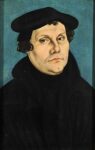
“We only need to remember that Luther was an Augustinian monk from Wittenberg.
“Zwingli was a parish priest in Zurich.
“Who doesn’t know that Jansenius, the author of the cursed Jansenism, was the Bishop of Ypres?
“The Anglican schism, promoted by the lust of Henry VIII, was mainly supported by his favorite, Archbishop Cranmer.
“During the French Revolution, the most serious scandals in the Church of God were perpetrated by revolutionary priests and bishops. The apostasies that afflicted the good during those tragic times are truly horrifying. The French Assembly witnessed scenes of this kind, which the curious reader can recount in Henrion or any other historian.
“The same thing happened later in Italy. The public apostasies of Gioberti and Fr. Pantaleone, of Passaglia, and of Cardinal Andrea are well known.
“In Spain there were clergymen in the clubs of the early constitutional period, clergymen in the burning of convents, impious clergymen in the Cortes, clergymen on the barricades, clergymen among the first to introduce Protestantism after 1869. Jansenist bishops were plentiful during the reign of Charles III. (See volume III of Heterodoxos, by Menéndez Pelayo, on this subject).
“Several of these men requested, and many applauded in pastoral letters, the unjust expulsion of the Society of Jesus. Even today, in several Spanish dioceses, some apostate clergy are publicly known, and, as is logical and natural, they immediately remarried.
“Let it be known, then, that from Judas to the former Father Jacinto, the lineage of Church ministers who betray their Leader and sell themselves to heresy continues uninterrupted. That alongside and in opposition to the tradition of truth, there also exists in Christian society the tradition of error; in contrast to the apostolic succession of good ministers, hell has the diabolical succession of perverted ministers. This should not scandalize anyone. In this regard, let us recall the Apostle’s words, which he did not forget to warn us about: ‘There must be heresies, so that those among you who are truly tested may be revealed.’” [emphasis added]
—– Fr. Félix Sardá y Salvany, Liberalism Is a Sin. 1887


