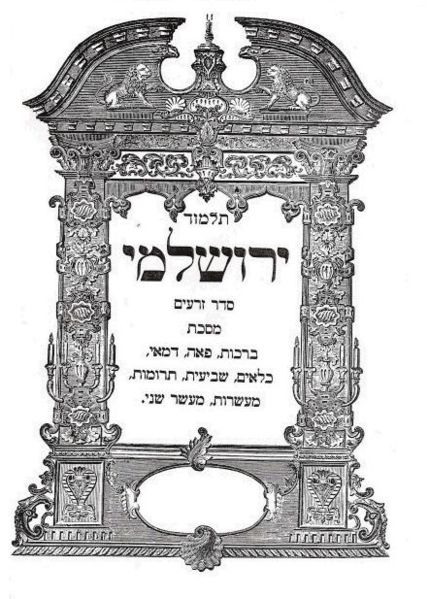
 THE TALMUD, the sacred text of Judaism, is comprised of rabbinic commentaries that were written over a period of hundreds of years and contain the oral traditions that have shaped Judaism since shortly after the destruction of the Temple in 70 A.D.
Americans, including many Jews, are generally unfamiliar with the Talmud’s content. While it is widely acceptable to criticize the intolerance of the Quran, the Talmud is off bounds for mainstream commentary. Thus many do not know just how intolerant the revered text of the official religion of the state of Israel is.
Benjamin Freedman was a successful Jewish businessman and Zionist activist who lived from 1890 to 1984. Later in his adult life, he became an outspoken critic of the Judaic mentality and eventually converted to Catholicism. He is said to have devoted much of his fortune to researching and publicizing the history of Judaism.
“The Talmud today virtually exercises totalitarian dictatorship over the lives of so-called or self-styled ‘Jews,’ whether they are aware of that fact or not,” he wrote in his 1954 work “Facts are Facts,” which is an extended letter to another Jewish convert. “Their spiritual leaders make no attempt to conceal the control they exercise over the lives of so-called or self-styled ‘Jews’. They extend their authority far beyond the legitimate limits of spiritual matters. Their authority has no equal outside religion.”
Not only does the Talmud, which includes more than 60 volumes of commentaries, regulate the thinking and daily lives of Jews, he wrote, it inculcates in them hostility toward gentiles, or non-Jews, in general.
Using the translation from the Hebrew by the Latvian priest and eminent scholar, the Rev. I.B. Pranaitis, Master of Theology and Professor of the Hebrew Language at the Imperial Ecclesiastical Academy of the Roman Catholic Church in Old St. Petersburg, Russia, Freedman proved his point by listing summarized Talmudic references for some of the specific laws regarding Christians, and gentiles in general. I list them below. They conform with many other translations of the Talmud. Please feel free to correct any of these summaries if you can prove they are faulty. Again, some of these references refer to all non-Jews, not just Christians. (more…)

