
FROM Fr. Felix Sarda y Salvany’s Liberalism Is a Sin [full quote here]::
The apostate cleric is the first factor the devil seeks for his work of rebellion. He needs to present it in some authoritative way to the eyes of the unwary, and for that, nothing serves him better than the endorsement of some minister of the Church. And since, unfortunately, there is never a shortage of clerics corrupted in their morals—the most common path to heresy—or blinded by pride, also a very common cause of all error, he has never lacked ecclesiastical apostles and supporters, whatever form he has taken in Christian society.
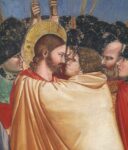
Judas, who began within the apostolate itself to murmur and sow distrust against the Savior, and ended up betraying him to his enemies, is the first type of the apostate priest and sower of discord among his brothers; and Judas, it should be noted, was one of the first twelve priests ordained by the Redeemer himself.
The sect of the Nicolaitans originated from the deacon Nicolaus, one of the first seven deacons ordained by the Apostles for the service of the Church, and companion of Saint Stephen, the protomartyr.
Paul of Samosata, a great heresiarch of the 3rd century, was bishop of Antioch.
The father and author of the Novatians, who so disturbed the universal Church with their schism, was the priest of Rome Novatian.
Meletius, bishop of the Thebaid, was the author and leader of the Meletian schism.
Tertullian, also a priest and eloquent apologist, falls and dies in the heresy of the Montanists.
Among the Spanish Priscillianists, who caused so much scandal in our country in the 4th century, are the names of Instantius and Salvianus, two bishops, whom Hyginus unmasked and fought; they were condemned in a council held in Zaragoza.
Perhaps the most prominent heretic the Church has ever known was Arius, the founder of Arianism, which swept as many kingdoms into its clutches as Lutheranism does today. Arius was a priest from Alexandria, bitter at not having attained the episcopal dignity. And there was an Arian clergy within this sect, to the point that for a long time much of the world had no other bishops or priests.
Nestorius, another of the most famous heretics of the early centuries, was a monk, priest, bishop of Constantinople, and a great preacher. Nestorianism originated with him.
Read more.
— Comments —
Patrick O’Brien writes:
John Wycliffe, English priest, was not excommunicated. He was in good standing throughout his life, although a thorn in the side of bishops. But Jan Huss was indeed executed for teaching the errors of Wycliffe. The name “Hus” means “goose” in Czech, and indeed his goose was cooked, hence the phrase.
Laura writes:
Thank you for the correction.


