
FROM The Catholic Church in the Modern World by E.E.Y. Hales (Hanover House, 1958):
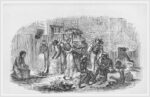
… There was indeed something formal, even forceful, about the way in which it was assumed that all those who were the subjects of His Catholic Majesty of Spain must needs become members of the Catholic Church, and the close association in the popular mind between obedience to the political representative of the Catholic King and obedience to the bishop was something which would react severely against the Church in South American in the nineteenth and twentieth centuries. Nevertheless, conversion carried with it not only an outward incorporation by baptism, in the Body of Christ, but some inward understanding too. If the Jesuit, Dominican, and Franciscan missionaries baptized the ‘converted’ Indians by thousands, they went on to instruct them in the meaning of the sacraments and the meaning of the Mass. Moreover, the Spanish and Portugese system required the same should be done for the Negro slaves, who had been carried overseas to toil in the West Indies, or on the American mainland from Florida down to Mexico, Peru, or Buenos Aires. This slavery was a great evil, but it was very much better in the Catholic fold. In the words of that coolly impartial and skeptically detached historian, the late Mr. H.A.L. Fisher, ‘The Roman Church honourably endeavoured to improve the lot of the labouring population in the Spanish colonies. The slave was baptised, prepared for the Mass, retained in his family group, and brought through his membership of the Church within the system of Spain. For the British colonies the Church of England made no comparable effort. While the Spanish Church pressed forward on its missionary enterprise the British planters looked with active disfavour on the attempt to spread among the blacks the disturbing ferment of Christian belief.'”
Thanks for reading!


