
PAUL Michael Clark writes:
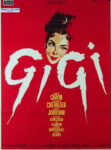
I read with interest your readers’ recent thoughts about classic screen musicals. One film I think particularly noteworthy in that context is 1958’s Gigi. It serves as a reference point in the erosion of Hollywood’s Motion Picture Production Code (“Hays Code”), the industry’s now-extinct set of moral guidelines — that’s to say, in the erosion of cultural standards in general.
Gigi’s creepy plot, about a teenager being groomed by female relatives as a courtesan, became defused in the eyes of many Eisenhower-era moviegoers thanks to the film’s cheerful cinematic sweep and high production values (including first-rate songs by Lerner and Loewe of My Fair Lady fame, another adapted story about female transformation). Certain concessions were necessary, of course, in the face of what filmmakers considered the public’s stilted bourgeois values.
For starters Gigi’s age was left unstated, as opposed to being 15 in the source material, a 1944 novella by Parisian author Colette. Filmmakers also chose an actress in her mid-twenties, Leslie Caron, for the title role though they patently portrayed the character as significantly younger.
Those involved in the production, to be certain, held no illusions about Gigi’s age. In 2024, at age 93, Miss Caron gave an interview to British magazine The Oldie, whose reporter noted how “When filming Gigi, she was a 26-year-old mother with an infant son, yet she carried off the part as a gamine 14-year-old,” then quoted the actress herself:
I was still feeding my little Christopher. My bosom was a little too voluptuous for a girl of 14 and I said to [costumer] Madame Karinska, “Why don’t we have braids to keep this little gilet?” Otherwise I looked too maternal.
Nine years earlier, a French movie adaptation of Colette’s tale earned a Condemned rating from the Catholic-sponsored National Legion of Decency, which concluded that the film “condones and glorifies immorality.” But the Legion proved lenient toward the Hollywood version, classifying it as “Morally Unobjectionable for Adults.” This was due primarily to two factors besides fudging Gigi’s age: an ending that putatively affirms marriage, and the framing of her courtesan training more as aristocratic etiquette lessons than what they subtly represented.
In that so-called age of gray flannel, popular and critical acclaim proved enormous. Gigi cracked the top five in 1958’s box-office receipts but clearly ranked No. 1 for the public. When the movie won all nine of its Academy Award nominations, including Best Picture, it set a record not broken until The Lord of the Rings trilogy’s final installment won 11 in 2003.
Interestingly, the No. 1 movie attraction that year was a rival romantic musical, South Pacific, whose characters include a teenage girl being pimped by her mother. Similar to Gigi, the source material (a James Michener novel) made this explicit while the movie softened it just enough.
A mainstream defense of Gigi emphasized how the lead couple — the teenage girl and her jaded roué Gaston, played by 36-year-old Louis Jourdan — ultimately reject plans to become man and mistress, opting instead for benefit of clergy (or at least benefit of the Conseil de Paris). This, we bumpkins are invited to believe, transforms the movie into a celebration of traditional morals. MGM in fact made that very argument to Production Code censors.
But the watchdogs’ concerns only further tested the ingenuity of Gigi producer Arthur Freed. From an IMDb note:
Freed was forced to walk a fine line with the story’s delicate subject matter, with smaller battles sacrificed in order to win the war, which in this case was the climactic scene wherein Gigi rejects a courtesan lifestyle because of her realization that, once her affair with Gaston had run its course, all that would be left for her would be to “go into another gentleman’s bed.”
Note that her objections aren’t on moral or religious grounds. The account continues:
When the censors grudgingly conceded to this, screenwriter Alan Jay Lerner was forced to be more covert in other, similarly risqué scenes, particularly the harsh confrontation between Aunt Alicia and Grandmama . . . in which the two guardians realize that Gigi has reached the age of consent. The entire exchange is written in unfinished sentences, leaving the actresses to complete their thoughts and intentions with facial expressions that make it perfectly clear that they are about to ready Gigi to become Gaston’s courtesan.
Nearly a decade afterward, analogous arguments — the ending justifies the meanness — recurred to excuse filthy content by citing supposedly compensatory finales.
Such a rationale accompanied the spectacularly influential Bonnie and Clyde, one of the decisive assaults on the imploding Code. Apologists claimed the movie’s Marxist mythology surrounding real-life psychopathic killers was blunted by a savage finale — more graphic than any that had yet appeared in a mainstream motion picture — showing the vivacious lovers convulsing in a hail of police bullets.
So pay attention, Hollywood said, did you carping bluenoses somehow miss the message that crime doesn’t pay? This sophism wasn’t a fresh dodge: It traced its ancestry to Pre-Code days, as for example with The Public Enemy, that 1931 gangster classic which shocked audiences more for how Jimmy Cagney wielded a grapefruit than a .38 revolver. That story ends with Cagney’s character dead on the floor, followed by a preachy closing title:
The Public Enemy is not a man, nor is it a character — it is a problem that sooner or later we, the public, must solve.
But while we’re solving the problem (sooner or later), let’s romanticize attractive, rakish thugs.
That species of defense has surfed the waves of subsequent movies portraying charismatic criminality across the decades, Scarface, Black Caesar, Michael Mann’s Public Enemies . . . as well as to Gigi’s cinematic descendants where prostitution blazes a path to blissful monogamy, e.g. Pretty Woman or Redeeming Love. Yet few bother to argue any longer, and such concerns mostly collect dust in a cultural and political attic along with controversies over free silver, the League of Nations, Quemoy and Matsu.
But a footnote is in order concerning Gigi. Thirty years after producer Freed brought her story to the masses, and about half as long after his death, Shirley Temple revealed he’d made advances toward her when she was 12.
In other words, Gigi the musical — which gave us its signature song “Thank Heaven for Little Girls” — was quite literally produced by a pedophile.


