
See Part One of this post here.
FROM Bernard Fay’s Revolution and Freemasonry, 1680-1800 (Little, Brown and Company, 1935):
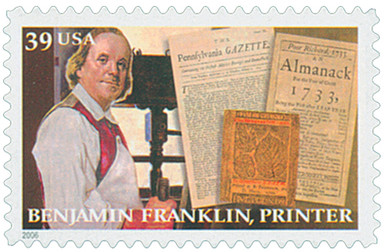
[Benjamin] Franklin, the Masonic apostle, was not only organizing a Masonic intellectual front in America, but was also building up a Masonic press. He was by far the most outstanding newspaperman in the New World. His Pennsylvania Gazette was the most energetic and forceful newspaper in America. He was also the first owner and director of a chain of newspapers in America; he lent money to his workmen to enable them to start newspapers in other cities: Whitemarsh in Charleston, Parker in New York, and so on. Thus, he established in all the English colonies of America a network of Masonic newspapers animated with the same spirit and working in collaboration. In New York the Journal of Zenger, in New England the Boston Gazette of Eden, constituted the northern strongholds of this Masonic press. They agreed on preaching unity, fraternity, liberty, in defending Protestantism against Catholicism, the Hanoverian kings against the Bourbons, the English Parliament against the French despotism and everything that was Saxon and Whig against everything that was Latin and obsolete. The government could not be dissatisfied; these newspapers were truly patriotic; but this patriotism went so far that it passed beyond the goal — inclined to turn against Britain itself as not being English enough.
This danger became obvious when the first lodges of the Ancients began working in America. At once they showed more activity and boldness than their predecessors. They were outspoken, ready to take a stand against governors, magistrates and churchmen; their influence was evident. Not that the American lodges had forgotten the fundamental rule of the Brotherhood, to avoid entanglements in politics; but they could not, as the English lodges did, exert their influence without playing politics….
…. This Masonic boldness was more noticeable in America, because conditions in the New World differed from those of Europe, where literature was the main outlet for dissatisfaction.
The English Colonies of America had not yet produced many books; all novels were imported or reprinted from European books; poetry, with the exception of a few modest attempts, came entirely from the Old World; history was brought from Paris and London. Only the sermons, the almanacs and the newspapers were native products, born from the soil, and of the three it is hardly necessary to state that the colonists read fewer and fewer sermons whilst the newspapers and the almanacs became increasingly popular from year to year. Each tavern had a set of newspapers and a store of almanacs which were discussed warmly and at great length during the long winter evenings, while men were drinking their punch and grog, or during the hot days of summer when they were sipping their long drinks. As the towns and cities grew larger and the taverns multiplied throughout the countryside, people in the urban centers became more interested in the newspapers and the Masonic newspapermen became more influential.
Newspapers, taverns and lodges in cooperation with some preachers and merchants started the revolutionary movement. … As a whole, Freemasonry sided with the Americans because English Freemasons were all “patriots” attached to the Whig principles, to the parliamentary system and to the idea of popular representation. Such were the feelings which eighteenth century Freemasonry called “patriotism.”
[pp 233-35]


