I POST this excerpt from commentary by the website Novus Ordo Watch with a major warning. Novus Ordo Watch promotes “sedevacantist” chapels and sects that are in complete violation of the disciplinary laws of the Catholic Church, luring in the unsuspecting with promises of true worship and community, and therefore this website generally should be avoided or read with great caution. (I do not say this on my own authority, but on the authority of canon law and teachings of the Magisterium.)
That said, Novus Ordo Watch’s remarks on this subject are excellent, as is much of its analysis of modernism and its false leaders:
Last week ‘Bishop’ Joseph Charles Bambera of Scranton, Pennsylvania, caused a ruckus when in his role as chairman of the USCCB Committee on Ecumenical and Interreligious Affairs, he posted the following video message for Yom Kippur, the holiest day of the year in Talmudic Judaism.
.Bambera began thus: “As our Jewish friends and neighbors observe Yom Kippur, the day of Atonement, I want to extend my warmest wishes for a meaningful and a peaceful day.”
So far, so bad. Observing Yom Kippur is spiritually worthless, nay harmful, as what was once a day instituted by God in anticipation of the Atonement of the Redeemer Jesus Christ (see Lev 23:26-32), can now no longer be observed. The reason is that doing so would imply a rejection of the True Atonement of Christ, which Yom Kippur in the Mosaic Law merely prefigured: “For the Law, having but a shadow of the good things to come, and not the exact image of the objects, is never able by the sacrifices which they offer continually, year after year the same, to perfect those who draw near” (Heb 10:1; Confraternity).
Under a chapter heading of “On Superstition” and a section subtitle of “Wrong Ways of Worshipping God”, the Jesuit moral theologian Fr. Thomas Slater confirms this:
God may be wrongly worshipped either by false worship or by superfluous worship being paid him. … The ceremonies and practices of the Jewish religion signified that the Messiah was to come, and so now, after the coming of our Lord, they could not be employed without superstition [=false worship]. Inasmuch as falsehood in religion is a grave injury to God, this species of superstition is mortally sinful.
(Fr. Thomas Slater, S.J., A Manual of Moral Theology, vol. 1, 5th ed. [London: Burns Oates & Washbourne, 1925], p. 140; underlining added.)
Read more.
Bambera’s message, with its appearance of good will, is not of any use or value to Catholics or to Jews. Indeed it is grossly harmful, although to be fair he is merely following the values of the new religion tyrannically imposed on Catholics in 1965. Bambera is not even a bishop by the laws of the Catholic Church and he himself has left the Church, whether he knows it or not — a shocking statement, for sure, for those who do not see these things with the eyes of faith. I’m sure Bambera has worked very hard and sacrificed much. I do not judge his subjective state or ultimate disposition before God, only his objective allegiances. May God have mercy on his soul. Again, I do not write this on my own authority, but on the unchangeable authority of the Catholic Church, which no human being on the face of the earth can alter.
It is not at all charitable to Jews to encourage them in ignorance or stubborn alienation from God. It indeed is the height of indifference and implies that they are unworthy of true companionship with God. Jews deserve the truth, however much it may be wasted on them and however much they in the ignorance that results from the panoply of grandiose lies about history they are fed, and from an inveterate spirit of vengeance that is part of their religious system and even the ceremonies of Yom Kippur, may lash out at those who proffer it to them. They too are creatures of God, ardently loved however much they forsake Him.
One must always wonder about people like Bambera. Are they speaking out of concern for Jews — or out of fear of them? Fear of their remarkable vengeance and willingness to crush, with the assistance of well-funded, highly non-ecumenical organizations that constitute a bullying religious mafia, every whisper of criticism.
Whatever it is, I guarantee you, the rabbis still dislike him.
“Ecumenism” is a one-way street. It boils down to Jews retaining their religious system and immense pride — and would-be Catholics licking their very toes in craven submission and giving up sacred and exalted truths, as well as their precious souls. Can you imagine a single rabbi anywhere offering this sort of greeting toward Catholics on Easter or during Lent? What a terrible bargain. Ecumenism is a bargain straight from the bowels of hell. It has converted no one, but has caused such a tragic loss of souls, one can only pray to God to bring this apocalyptic period of apostasy and mass imbecility to a close.
What can we do in the meantime? We can love the truth.
We can love it with such an intensity and a ferocity even that our attachment will counter-balance the flimsy, doomed and outwardly triumphal hatred for it. The supernatural love of the few weighs more than the vast hatred of a multitude.
(more…)


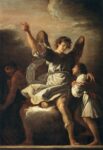
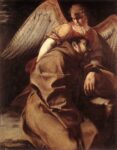
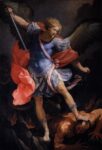
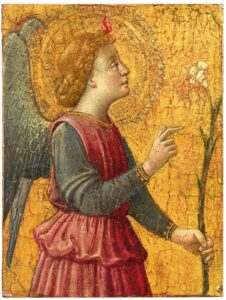 October 2 is the Feast of the Guardian Angels.